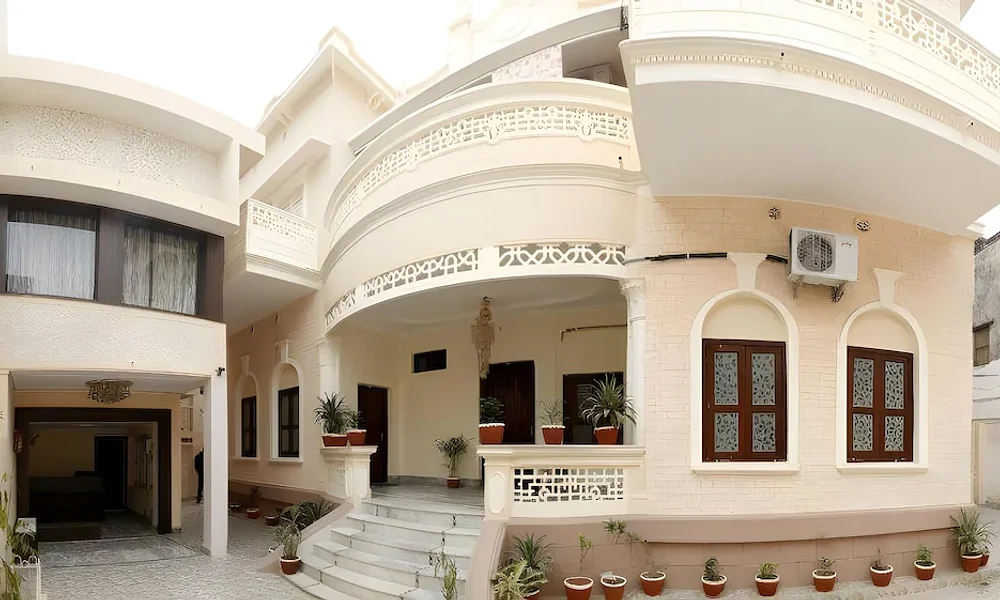




India’s sole chef-owned palace property
Showcases the Geographical Indication (GI) tagged Ganjifa art and card game
Sawantwadi was a Princely State that carved itself a place in Western India during the 17th century, serving Adil Shahi's Sultanate of Bijapur. Under the administration of the Sawant Bhosle dynasty, the region prospered, and alongside their many civic projects, they also built their royal palace. Today, Sawantwadi Palace titles itself as a boutique art hotel, showcasing the creativity and heritage of its region. Owned and managed by the royal family, Rajesaheb Khem Sawant VI welcomes travelers from all over to experience a luxurious stay in their ancestral residence. Discover the historic and natural beauty of Sawantwadi and the Ghats, and indulge in a unique vacation you won't find anywhere else.
E-1,The palace, Khaskilwada, Sawantwadi. Sindhudurg., 416510 Sawantwadi, India
The story of Sawantwadi Palace is deeply tied to the city of Sawantwadi and the Sawant Bhonsle dynasty who ruled it. Their founder, Khem Sawant I, established the family in 1627, following their victory against the Kudal Deshastha. At his side during the battle was his nephew and heir, Khem Sawant II. They first settled atop Narendra Hill, but when he passed away, Khem Sawant II relocated his seat to the village of Charathe, situated below the hill. The village eventually changed its name to Sawantwadi, in honor of its rulers.
The mastermind behind the construction Sawantwadi Palace is Khem Sawant III, who ruled the city from 1755 until 1803. Part of the design was to have the palace face Narendra Hill, the site of their dynasty's triumph and dominion. Later in 1874, the city built Moti Lake, a manmade reservoir, in front of Sawantwadi Palace.
Following nationwide reforms in India and the abolition of royal titles, the Sawant Bhonsles pivoted toward civic pursuits. They transformed their ancestral palace into a posh heritage hotel, with various sections converted into art galleries and museums, showcasing their family treasures and heritage.
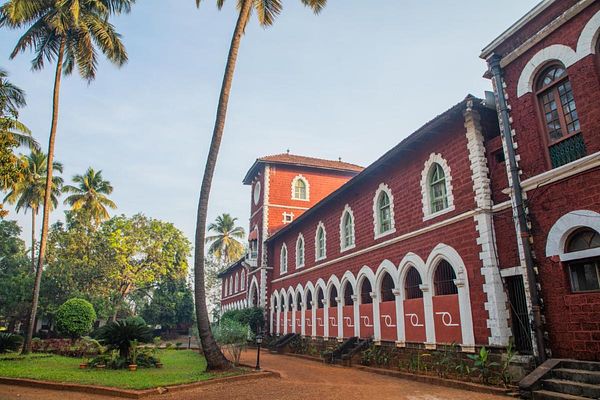
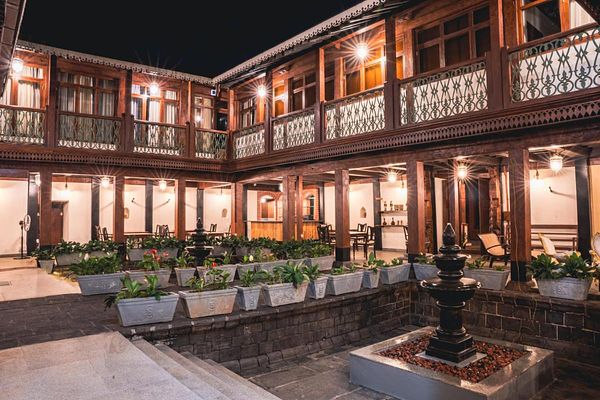
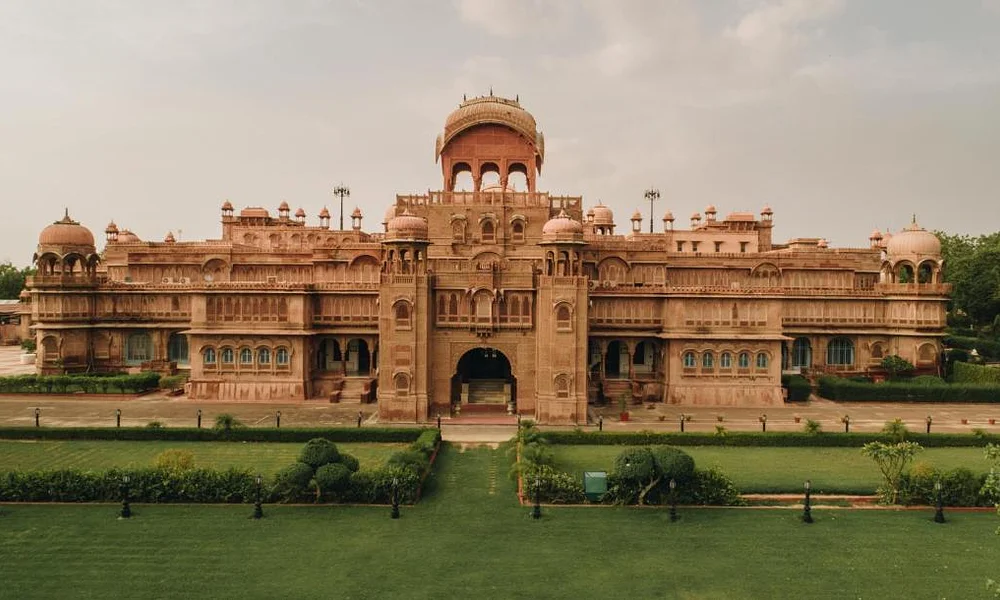
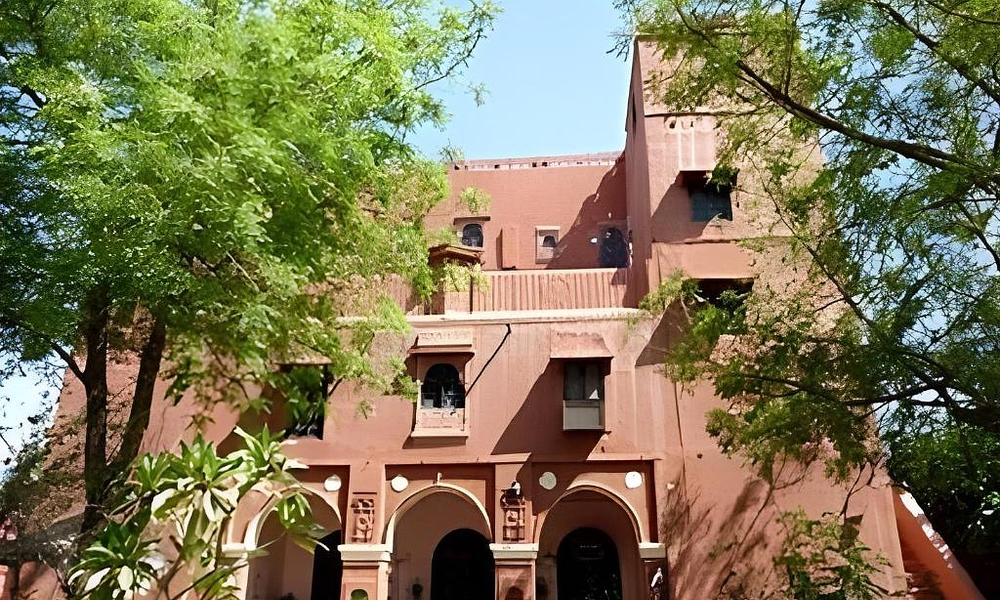
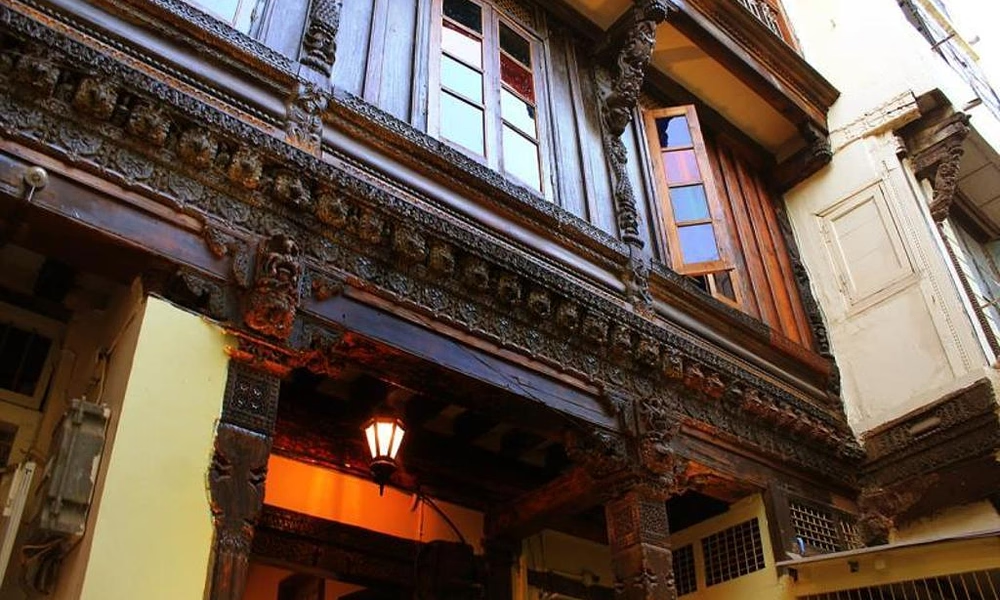
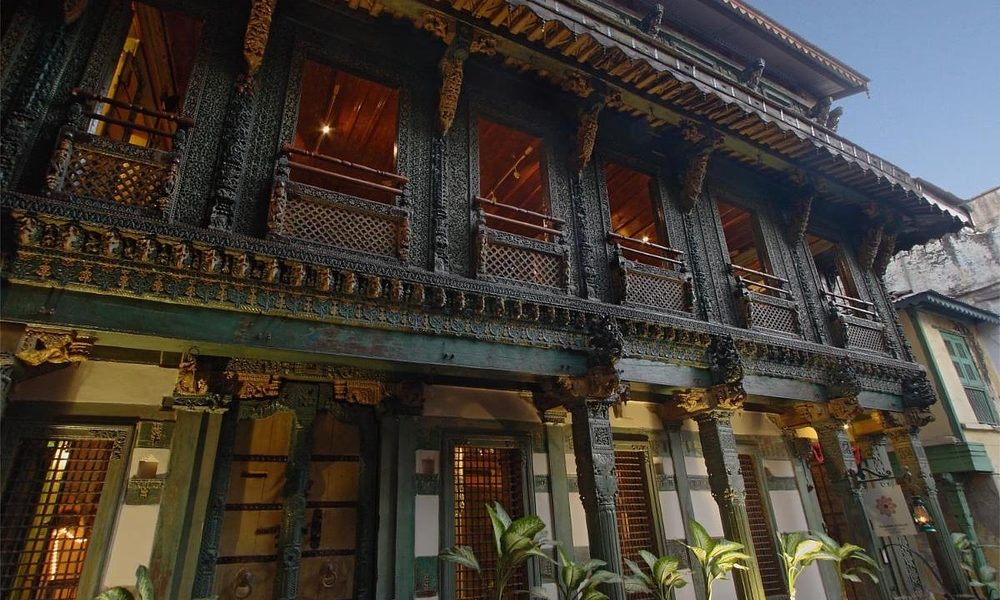
Since Sawantwadi Palace was built sometime in the latter 18th century, it bears architectural styles that combine local Maharashtra designs and influences brought by foreign trade. Under Khem Sawant III, the palace was built with a striking red laterite structure with details like curving arches. The palace also makes use of multiple courtyards, taking advantage of natural light and fosters a sense of openness. Elements salvaged from older buildings in the area are also reused, such as the teakwood pillars carved with depictions of scenes in the Ramayana.
The Taisaheb Wada is a palace wing originally built for the Sawant queens, and features classic jharokha windows and verandas. Also decorating its rooms are antique art and woodworks from the family's collection, as well as emblems depicting Lord Vishnu, meant as protective charms. Contrasting the accommodation wing is the lavish durbar hall. This was where the Sawant kings held court, and showcases stained-glass windows, Minton tiles, and a massive chandelier.
The ones in charge Sawantwadi Palace's royal kitchens are none other than its Yuvraj and Yuvrani - meaning its Crown Prince and Princess, respectively. Prince Lakham met the love of his life, Shraddha, at the Culinary Institute of America. After honing their skills in prestigious hotels and restaurants in the United States, they've returned to Sawantwadi with the goal of turning the city into a culinary destination. Chef Lakham Bhonsle specializes in baking and creating amazing pastries, with a flair for scientific curiosity and artistic presentation. Contrasting and complementing him is Chef Shraddha Bhonsle's expertise in international cuisine, with each item prepared in a warm and authentic home-cooked fashion.
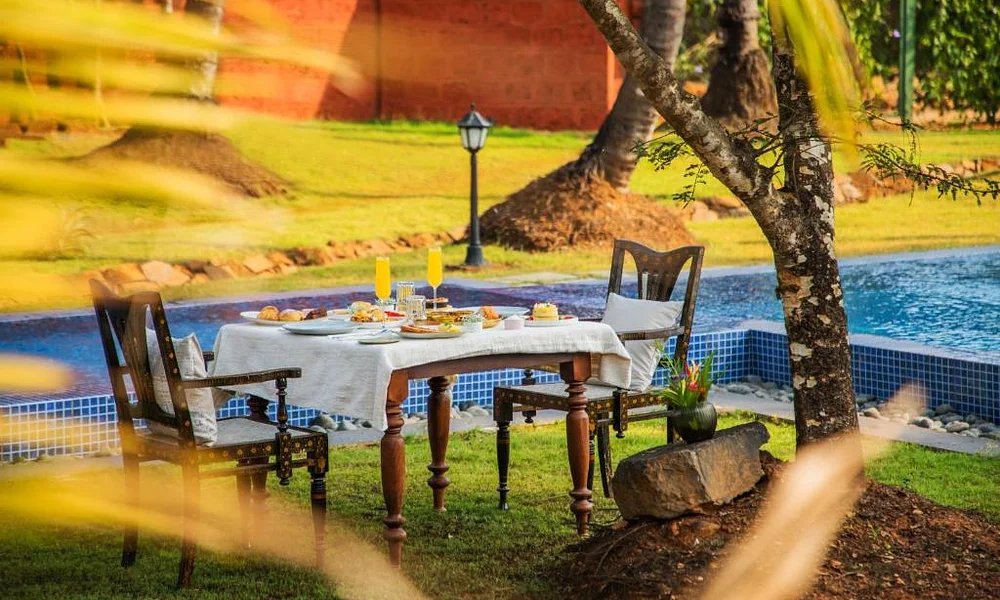
Guests dining at Sawantwadi Palace will be treated to magnificent meals showcasing local Maharashtrian cuisine, the flavors of the Indian subcontinent, and international favorites such as Japanese ramen. The palace also serves signature thali plates, each made with seasonal ingredients such as jackfruits and mangoes.
Begin your Happily Ever After with a fabulous wedding in an actual royal palace. Sawantwadi Palace welcomes couples looking to celebrate their destination weddings with grand ceremonies and banquets amidst the lush greenery of Maharashtra. Contact the hotel via their email or website inquiry form in order to find out more regarding venues, services, and quotes.
Embracing its status as an art boutique hotel, Sawantwadi Palace ensures that guests will not only be observers, but actual participants in Sawantwadi's local culture and heritage.
Learn to make Ganjifa art at the palace's workshop, taught personally by lacquerware artists. You'll be painting your very own Ganjifa cards, which you can take home as a souvenir or to be given as a gift. You may also visit the lacquerware workshop and observe the artisans make Ganjifa cards, along with a variety of lacquered items such as furniture, chess sets, and toys.
For a much closer and in-depth look at Sawantwadi's heritage, you can also get to personally know the royal family. Take a personal guided tour of the palace and its museum wings, and enjoy afternoons and evenings sipping tea with the Sawant Bhonsles, sharing tales and experiences.
For excursions outside the palace, guests can travel to the nearby Amboli Ghats. Up on the royal mountain estate, travelers can enjoy a picnic surrounded by the lush vegetation and diverse wildlife of Western India. The estate also contains the remnants of the Sawant Bhosles' earlier palace, before they relocated to Sawantwadi.
Other wonderful day trip options include the beaches at Shiroda or Vengurla, and trips to outlying communities like Pinguli Village, to see its leathercrafting and leather puppetry heritage.
If you're planning to celebrate a birthday or anniversary while at Sawantwadi Palace, you can reach out to the management via email or website contact form and express your plans. Since they offer on-site dinner services, you can request a personalized affair, with some special items such as a commemorative cake or dish.
Seaside town known for its scenic beaches and its history of trading with the Dutch. (45-minute drive)
Mountain pass and hill station famed for its mystifying natural beauty and diverse wildlife. (50-minute drive)
Hill overlooking Sawantwadi, and was the earlier settlement of Sawant Bhosles before moving to Charathe. (8-minute drive)
Manohar International Airport (GOX) is the nearest international airport to Sawantwadi Palace, 45 minutes away by car.
Sawantwadi Road Station is the closest railway terminal to the palace, 15 minutes away.