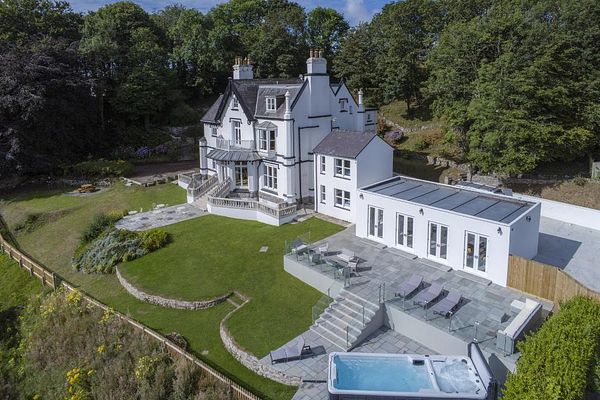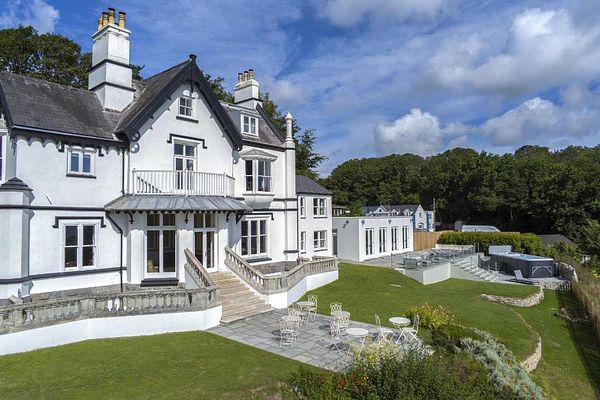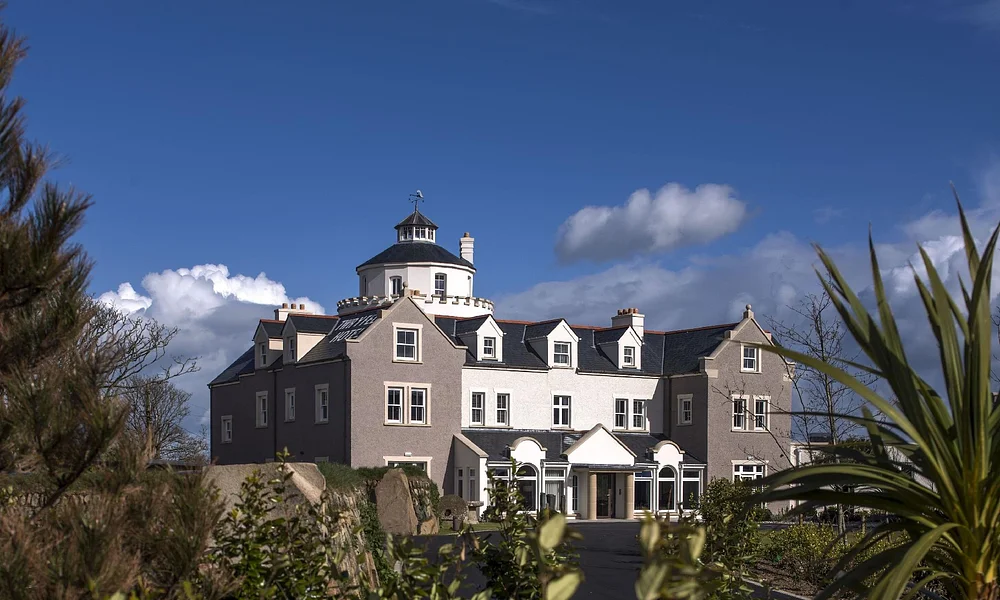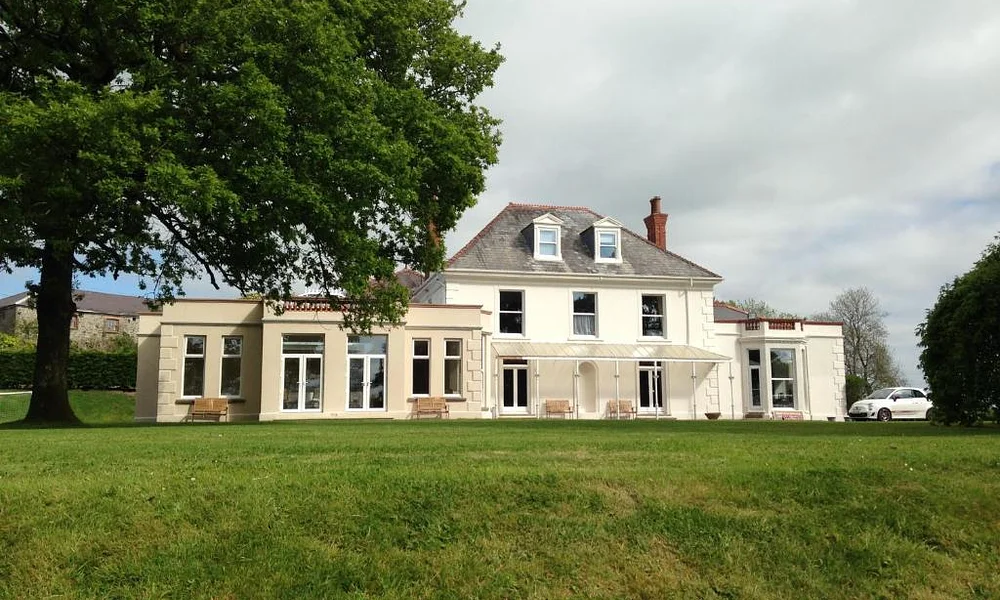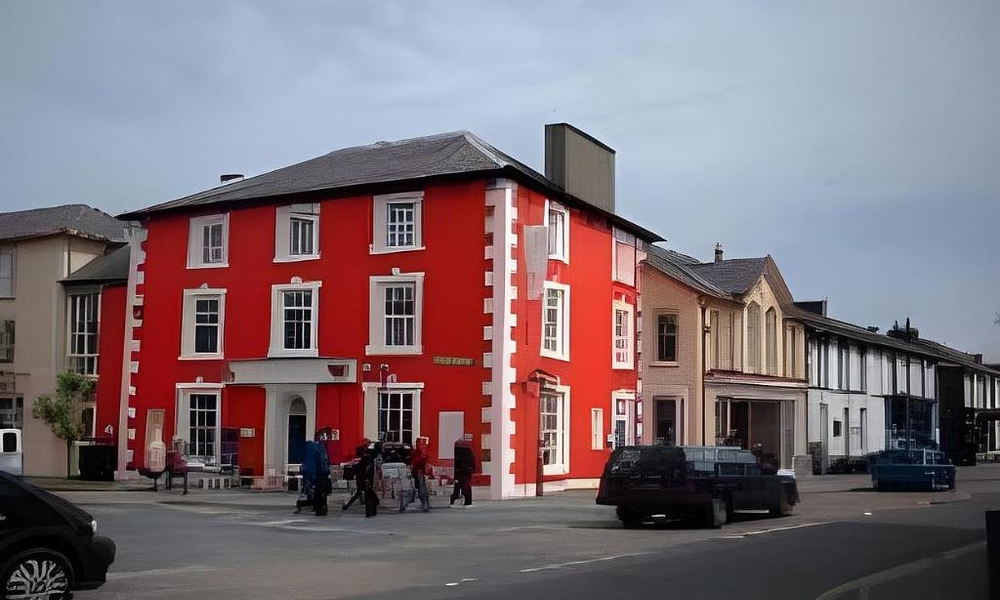




Britain's coastal villages are dotted with gorgeous Regency-era manors and mansions that inspired the settings of literary works, such as Jane Austen's Pride and Prejudice. Penally Manor, built in 1840 during the Victorian years, is a lovely example of these, featuring beautiful period architecture as well as enticing modern amenities. Both within and without, guests can admire an immersive British country atmosphere while enjoying dips in the whirlpool tub or whipping up feasts in the modern kitchen. The area around Penally is also perfect for romantic or fun trips, with plenty of options for excursions such as boat trips, and visits to neighboring villages or islands.
Penally Manor, Penally, Tenby, United Kingdom, SA70 7PZ
Penally Manor, situated in the coastal village of Penally near Tenby in Pembrokeshire, was constructed sometime during the 1840s. Today, it is a Grade II listed manor with picturesque vistas over Carmarthen Bay and Caldey Island. This gives the small estate a very Victorian and Regency atmosphere, reminiscent of Austen's Pride & Prejudice and Brontë's Wuthering Heights. The estate was notable in the late 19th century as the first house in Pembrokeshire to be lit by electricity.
Penally Manor exemplifies the Victorian Era's picturesque domestic architecture that is immortalized in media such as Byronic romance and Gothic novels. The exterior is sensibly tailored to the estate's dramatic coastal setting, overlooking Carmarthen Bay and Caldey Island. It was built around the 1840s using rendered rubble masonry and slate roofs, set with an asymmetrical composition iconic to the country houses of its period. Its façade also features a notable canted bay window with scalloped eaves, as well as mullioned and transomed windows, and French doors that open out to views of the sea.
For its interiors, the manor boasts 14 stunning rooms and suites, equipped with furnishings and decor that celebrate its character and craftsmanship. Also intact is the grand L‑shaped staircase, featuring turned balusters and molded handrails. Each room is uniquely styled, with some dressed in Gothic aesthetics, along with a beautiful Georgian room with a fine marble‑insert chimneypiece. The original architectural features of each accommodation have also been integrated instead of replaced, adapting the fireplaces, ornate cornices, and wood panelling into modern use.
Although Penally Manor does not have its own food services, it boasts a modern, fully equipped double kitchen, letting you self-cater during your stay. Whip up a feast using local ingredients bought from Penally or Tenby. Made up of coastal communities, Pembrokeshire will have plenty of seafood delicacies available fresh, including shellfish and crustaceans. The manor also has barbecue facilities, letting you prepare the local ingredients in a variety of delightful ways.
The region of Penally and Tenby is famous as a quiet coastal corner of Pembrokeshire, attracting numerous local and foreign visitors looking for a relaxing retreat. Over at Tenby, travelers will have plenty of peaceful beaches to play and hang out on, such as Harbour Beach and Castle Beach. They can also take charters to go fishing around Saundersfoot Bay or visit nearby Caldey Island. For historic landmarks, there's the Tudor Merchant House and the Tenby Museum and Art Gallery, considered one of Wales's oldest museums.
Penally, on the other hand, boasts plenty of Medieval Era and Victorian Era buildings, with several of the latter converted into heritage stays. The Saint Nicholas & Saint Teilo Church remains intact and actively used today, showcasing early Welsh architecture. On the other hand, Penally Abbey is a rectory that now operates as a boutique hotel and dining venue. Also along the coast is Manorbier Castle, a fortified estate dating back to William the Conqueror's Welsh campaigns, and known for its well-preserved exterior stonework.
Local museum situated within Tenby Castle's estate and features various exhibits about the town's feudal and maritime history. (12-minute drive)
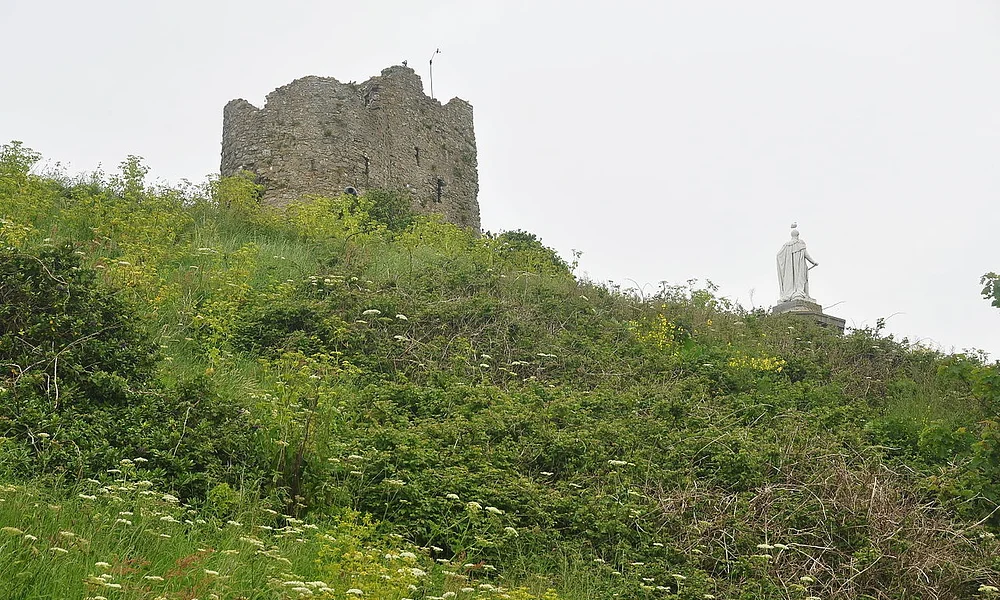
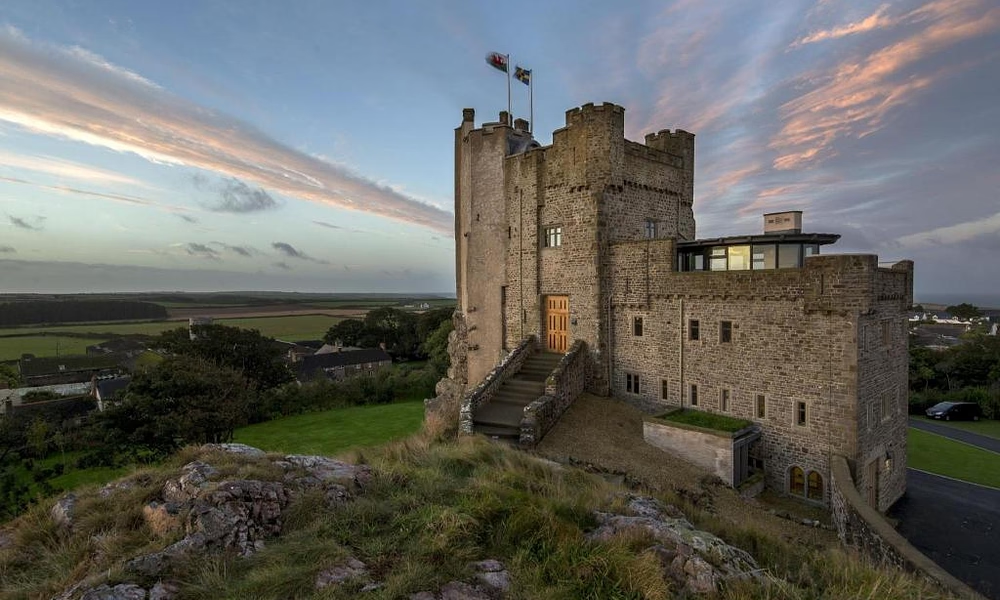
Relatively well-preserved medieval fortress from the 11th century, built by the de Barry family. (11-minute drive)
Historic house from the 15th century, now managed by The National Trust and depicts architecture and interior designs meant to replicate Welsh life during that era. (10-minute drive)
Cardiff Airport (CWL) is the nearest international airport to Penally Manor, and is a 130-minute drive from the estate.
The closest railway station to Penally Manor is Penally Station, just a short 8-minute walk from the estate.