



Explore Jaipur’s majestic Amer Fort—an architectural masterpiece of royal courts, hidden passages, and sweeping views. Dive into its history, architecture, and cultural significance.
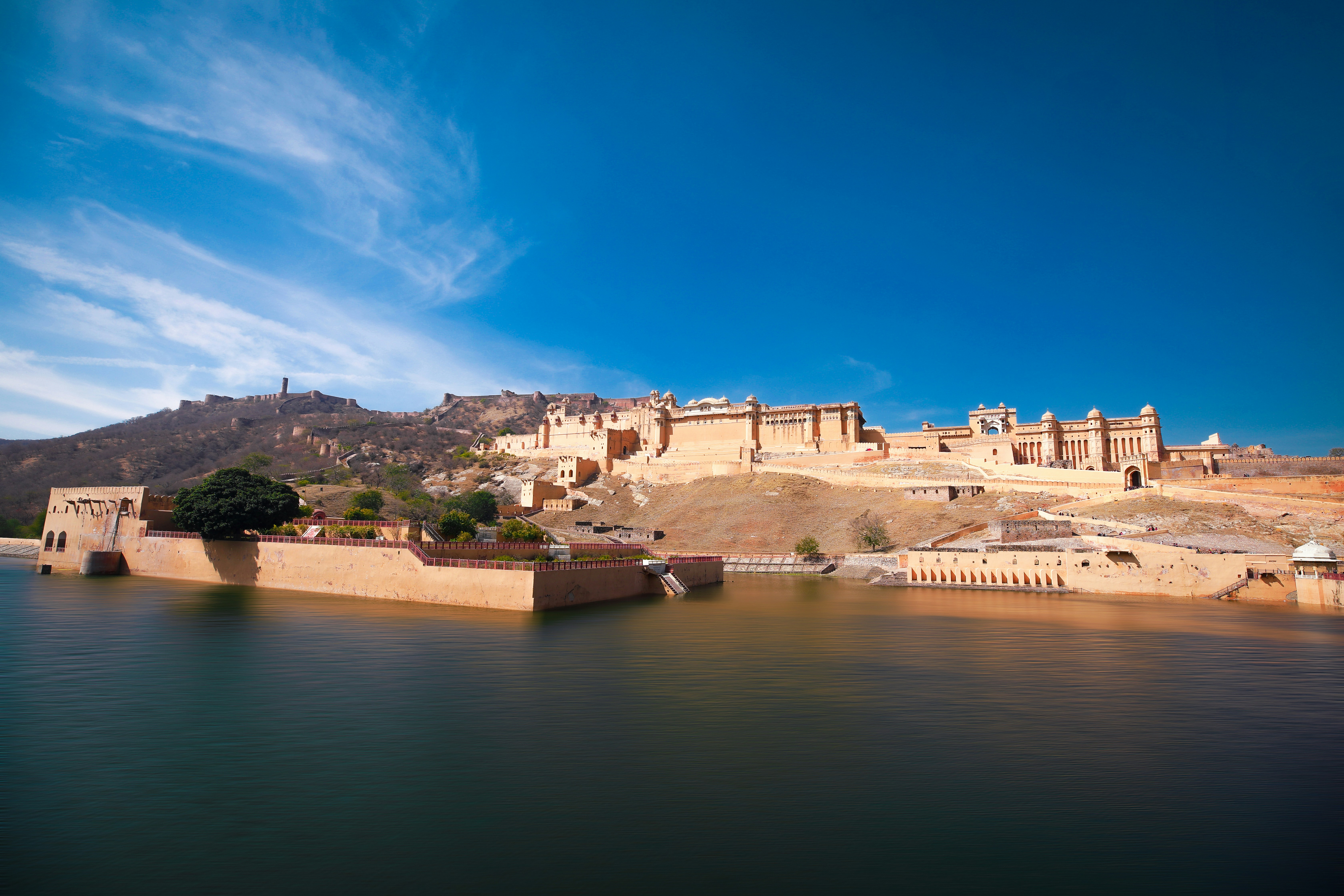
January 27, 2026Perched on a hill overlooking Maota Lake, Amer Fort is a stunning palace-fort complex near Jaipur that showcases the grandeur of Rajput architecture. Part of the Hill Forts of Rajasthan and recognized as a UNESCO World Heritage Site, it boasts a blend of military strength and royal elegance. Its intricate mirror-studded halls, sprawling courtyards, and hidden passageways offer visitors a rare glimpse into the royal lifestyle from centuries ago.
Amer Fort has underground passages that once linked it to Jaigarh Fort, and were used for safe movement during battles or emergencies.
Amer Fort's story begins in 1592 when it was commissioned by Raja Man Singh. Long before Jaipur was founded, Amer served as the capital of the Kachwaha Rajputs, making the fort the political and cultural heart of the region. Over the next century and a half, successive rulers expanded the complex, adding palaces, courtyards, and gardens that reflected both evolving tastes and the growing influence of Mughal aesthetics.
Built primarily from red sandstone and marble, the fort combines military strength and artistic refinement, showcasing Rajput design and Mughal elegance. Defensive walls, watchtowers, and steep ramparts coexist with delicate mirror work, carved pillars, and ornate gateways. It also became famous for spaces like the Sheesh Mahal (Mirror Palace), Diwan-e-Aam (Hall of Public Audience), and Diwan-e-Khas (Hall of Private Audience).
Amer Fort has witnessed many pivotal moments in Rajasthan's royal history: from strategic alliances and ceremonial processions to courtly rituals. Although the capital was moved to Jaipur in 1727, the fort remained a powerful symbol of Rajput legacy. Today, Amer Fort is a designated UNESCO World Heritage Site as part of the Hill Forts of Rajasthan and stands as a testament to centuries of royal ambition, architectural brilliance, and cultural heritage.
Amer Fort is open daily from 8:00 am to 5:30 pm, with a special evening sound and light show that starts at 7:30 pm. Take note that opening hours may change depending on the season.
| Ticket type | Price |
|---|---|
| Local visitors | ₹ 25 |
| Foreign visitors | ₹ 550 |
| Evening sound and light show - Hindi | ₹ 100 |
| Evening sound and light show - English | ₹ 200 |
Taxis and ride-hailing apps like Uber and Ola are widely available in Jaipur and offer the most comfortable option, especially for families or first-time visitors.
Rajasthan State Transport buses and city buses run regularly from Jaipur to Amer. From the Amer bus stop, you can take a short auto-rickshaw ride to the fort entrance.
From the base of the hill, visitors can walk up or take a jeep to get to the fort entrance.
The best time to visit Amer Fort is from October to March, when the weather is cool and pleasant for exploring the outdoor complex. It's best to visit in the early morning after the fort has opened to avoid large crowds and the heat of the afternoon sun. On the other hand, sunset to early evening is also an ideal time to visit the fort to catch the stunning light and sound show.
Visiting Amer Fort doesn't require a strict dress code, but visitors are encouraged to dress modestly and comfortably. Wear light and breathable attire, especially during warmer months. Since the fort requires plenty of walking, make sure to wear comfortable walking shoes.
If you are visiting Shila Devi Temple, make sure to wear clothing that covers the shoulders and knees.
Allot at least two to three hours or half a day to explore the entirety of the fort.
Work your way through the compound by starting with the palaces and large halls before exploring the residential quarters.
To better understand the history and legacy of the fort, consider getting an official guide. Alternatively, you can also get an audio guide to explore the fort at your own pace.
The fort is not wheelchair accessible, and visitors with less severe mobility issues can arrange a vehicle transfer or have a guide help them move between the courtyards.
If you're visiting later in the day, wait for the sunset and admire the views of the surrounding landscape and Maota Lake.
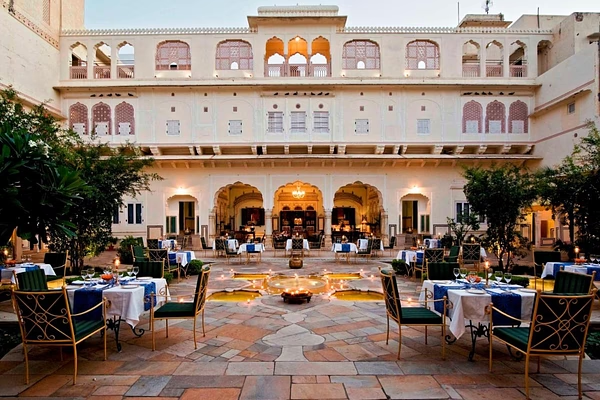
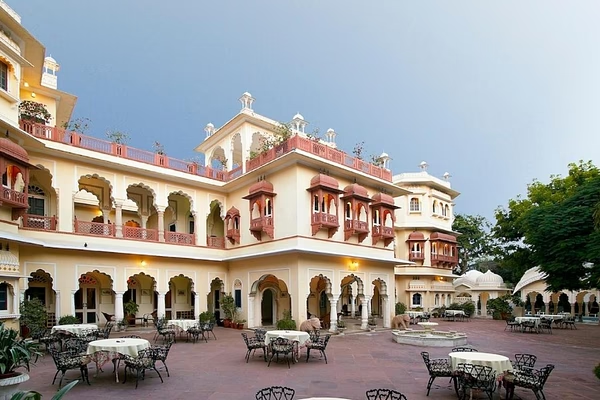
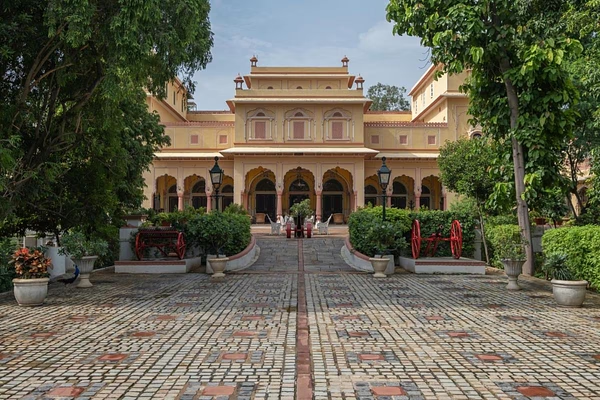
Equivalent to the manors and châteaux of Europe, havelis were mansion residences to nobles and merchants who served the Rajput rulers of India. Samode Haveli was built in 1799 by the Rawal clan who served the rulers of Jaipur. While the top two floors are reserved as the Rawals' ancestral residence, the lower levels are open as traditional stays. The blend of Rajput and Indo-Saracen aesthetics are seen in the grand halls decorated by paintings and furniture from the late 19th century.
The Haveli has recently hosted Nanagram Fine Jewels' 75th anniversary celebrations, with special performances by singer Kamakshi Khanna. It has also been featured in The Style List's 50 Best Boutique Hotels in India 2026.
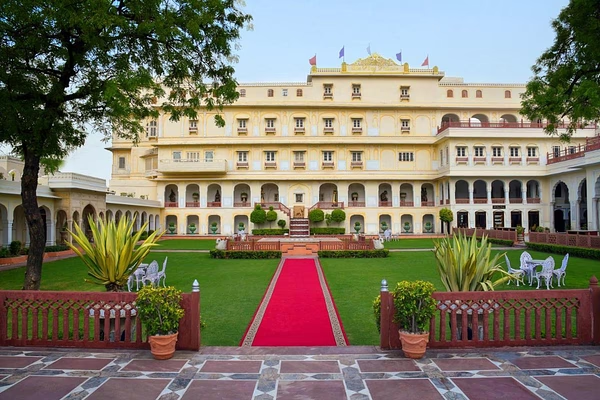
The Raj Palace, originally known as the Chaumoo Haveli, was built by Thakur Mohan Singh Ji, who was serving as the prime minister of the Raj. The property became a heritage hotel in 1996, decorated with treasures of past ages. Its Rajputana architecture shows Mughal influences, displaying the rich culture of Jaipur in solid, tangible stone.
Guests are welcomed with pipe melodies, marigold garlands and a refreshing drink. Each room offers a glimpse into the past, furnished with artifacts and decor made by Jaipur's artists and crafters. The palace's Maharaja Pavilion is included in Travel+Leisure's Most Luxurious Vacations in the World and is also in the running for Rajasthan's Leading Hotel Suite in the 2026 World Travel Awards.
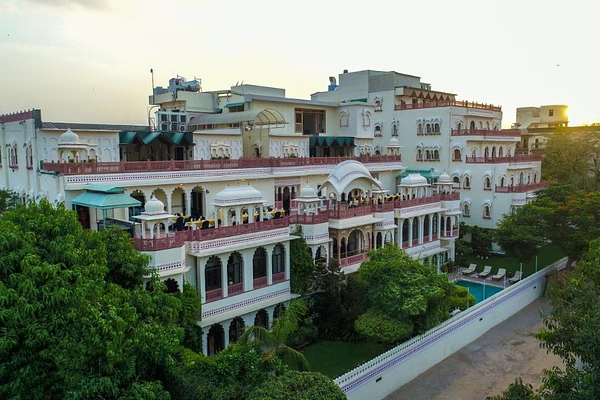
Alsisar Haveli is a heritage hotel in Jaipur, India, boasting beauty matching the legacy of its owners, the Shekhawat Clan, who opened its doors as a historic accommodation in 1994. Its traditional Rajasthani architecture exudes a regal ambiance from its ornately styled features and luxurious amenities, as found in its elegant rooms, outdoor terraces, and pools. The culinary experience is also lavish, offering regional cuisine in regal indoor and outdoor settings. Special events, such as weddings or seminars, are duly welcome. Guests can enjoy the haveli’s hospitality while immersing themselves in the local way of life through art, festivities, and cultural performances. Earlier this year, the haveli took part in Jaipur Art Week and hosted exhibitions of Indian artists.
While many havelis in Jaipur were built from the ground up as manors for the nobility, Haveli Kalwara began its life as a Rajput courthouse delivering justice to the people. It wasn't until Jai Singhji moved into the property that the courthouse became a mansion residence. Its next transformation wouldn't be until the dawn of the 21st century, when the Kalwara family would open the haveli's doors to the world as a heritage hotel. Where once courtiers and nobles would hold gatherings, meetings, and celebrations - the visitors of the current era come from all over to partake in festivities such as Holi and Diwali.
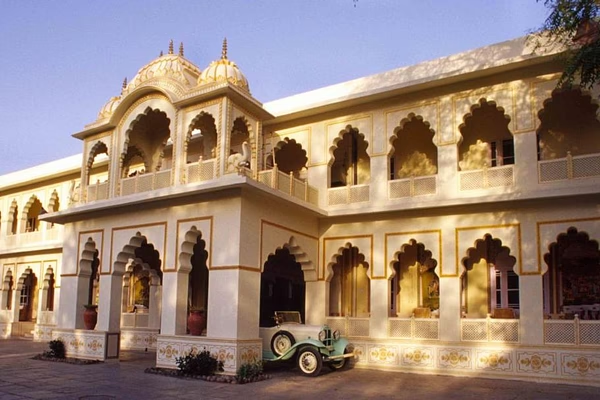
Shahpura House, a proud winner of the World Luxury Awards (2018) and World Travel Awards (2023), offers visitors a stay worthy of a king in its palatial complex. Reenvisioned as a heritage hotel under Maharaj Surendra Singh Shahpura, whose family owns and resides in the property, Shahpura House started welcoming guests in the early 1990s and has since provided gracious and elegant hospitality. The actual historical roots of the property date back to the early 19th century, and its lavish style and features reflect the grandeur of princely Rajasthan. Guests can enjoy and admire the blend of traditional charm and modern convenience, with amenities like yoga classes, festival celebrations, cultural programs, and other cultural experiences to keep themselves busy.
Needing a residence in Jaipur for his noble family, Thakur Chandra Singhji chose a spot near the northeast hills of Jaipur, under the watchful gaze of Nahargarh Fort. The location would become the Bissau Palace, where esteemed descendants of the Thakur live even today. Over the decades, the palace would amass a collection of literature, artworks, and curiosities. When Bissau Palace opened in 1965 as the first family-operated heritage hotel in Rajasthan, the collection would become centerpieces of the property's grandeur.
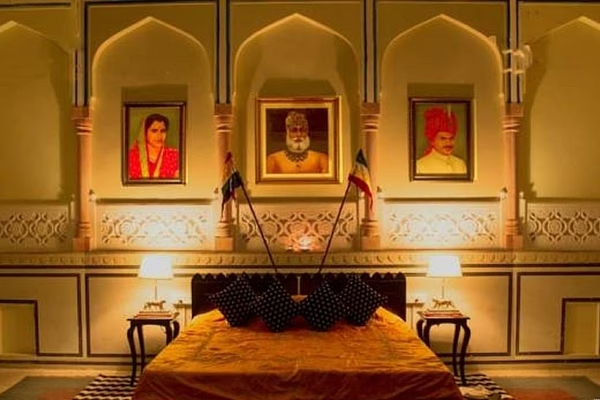
Guests staying at Hotel Bissau Palace will find it to be an attraction unto itself. Artworks, artifacts, and antiques decorate the halls and suites, creating a museum-like atmosphere that will be difficult to find elsewhere.
A grand heritage hotel adorned with lush gardens awaits in the Pink City of Jaipur. The Thakur of Kanota, General Amar Singh Ji, built Narain Niwas for his noble family during the early 20th century. It eventually opened its doors as a heritage hotel in 1978, offering guests the regal accommodations once meant only for princes. Though relatively newer compared to other historic establishments in Jaipur, Hotel Narain Niwas Palace's beautiful estate delivers a rich heritage experience. It is located within easy reach of many local historical and cultural attractions. Gardens with flowers and fruit orchards gracefully contrast with the colorful sandstone of the hotel. The palace also livens up with performances from traditional musicians, folk dancers, and puppeteers.
Step into Jaipur’s historic grandeur at The Umaid Vilas Royal Heritage Haveli, originally built in 1860 by the Karansar royal family. This beautifully restored villa is part of an opulent sanctuary blending traditional artistry with modern sophistication. Suites feature handcrafted furniture, antique chandeliers, and plush bedding.
Wake up to City Palace views, unwind in elegant lounges, relax in the courtyard, and indulge in luxury bath amenities by MaEarth Botanicals. Guests enjoy the service of a private butler, gourmet Rajasthani meals, and concierge-assisted city tours to Jaipur’s hidden gems. With City Palace, Hawa Mahal, and Tripolia Bazaar minutes away, The Umaid Vilas Royal Heritage Haveli lets you live the royal experience like never before.
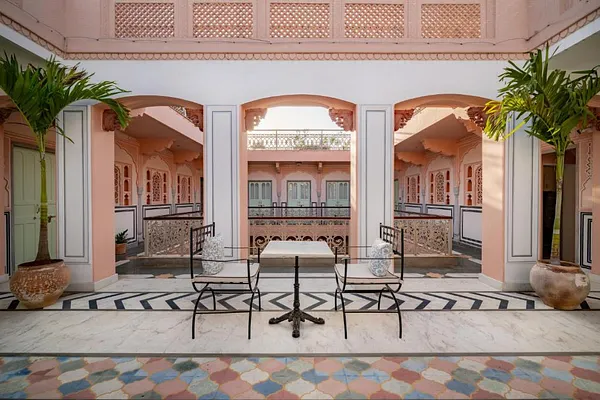
The Padmaa Jaipur began as a traditional haveli, built in 1735 by Shri Seva Ram Ji. The family was known for their jewellery and was a thriving business for seven generations. Today, the property is a haveli hotel providing an urban oasis in the middle of Jaipur's walled districts. It is close to several iconic landmarks of the Pink City, such as the City Palace complex and the Albert Hall Museum. When they're not out adventuring, guests can take advantage of the haveli's amenities and services. These include a cozy spa and a pool area, along with courtyard spaces with a lounge-like atmosphere.
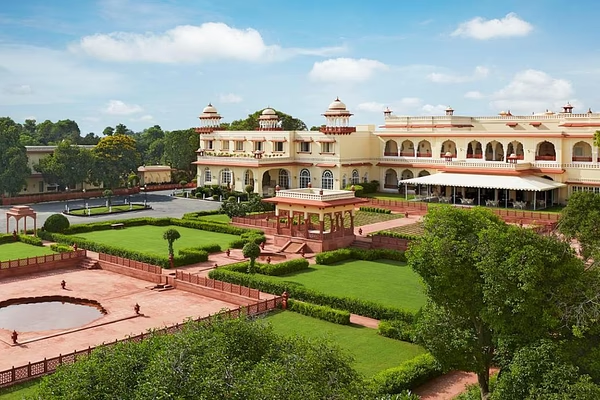
Built in 1745, Jai Mahal Palace once served as the residence of three Prime Ministers of Jaipur. Later restored by the Taj Group, this five-star heritage hotel features Indo-Saracenic architecture and 18 acres of Mughal gardens. Guests can unwind at J Wellness Circle, dine on royal and global flavors, or host lavish weddings on the palace lawns. The royal-style welcome, with elephants, horses, and folk music, adds a touch of grandeur to every arrival. You can also join a guided heritage walk through the palace or explore nearby cultural treasures like Amber Fort, City Palace, and Johari Bazaar. Named Best Hotels in India by the Condé Nast Traveler Readers’ Choice Awards 2025, Jai Mahal Palace reflects Jaipur’s heritage.