



Philippines Heritage Landmark min read

Fort Santiago: Historic Spanish Fortress in Intramuros, Manila - A Complete Visitor's Guide

Learn more about the walls of Fort Santiago: its origins as a historic Spanish fortress, its connection to a Philippine hero, and how it serves as a symbol of Philippine heritage and resilience.

January 09, 2026

Fort Santiago: A Symbol of Filipino Resistance

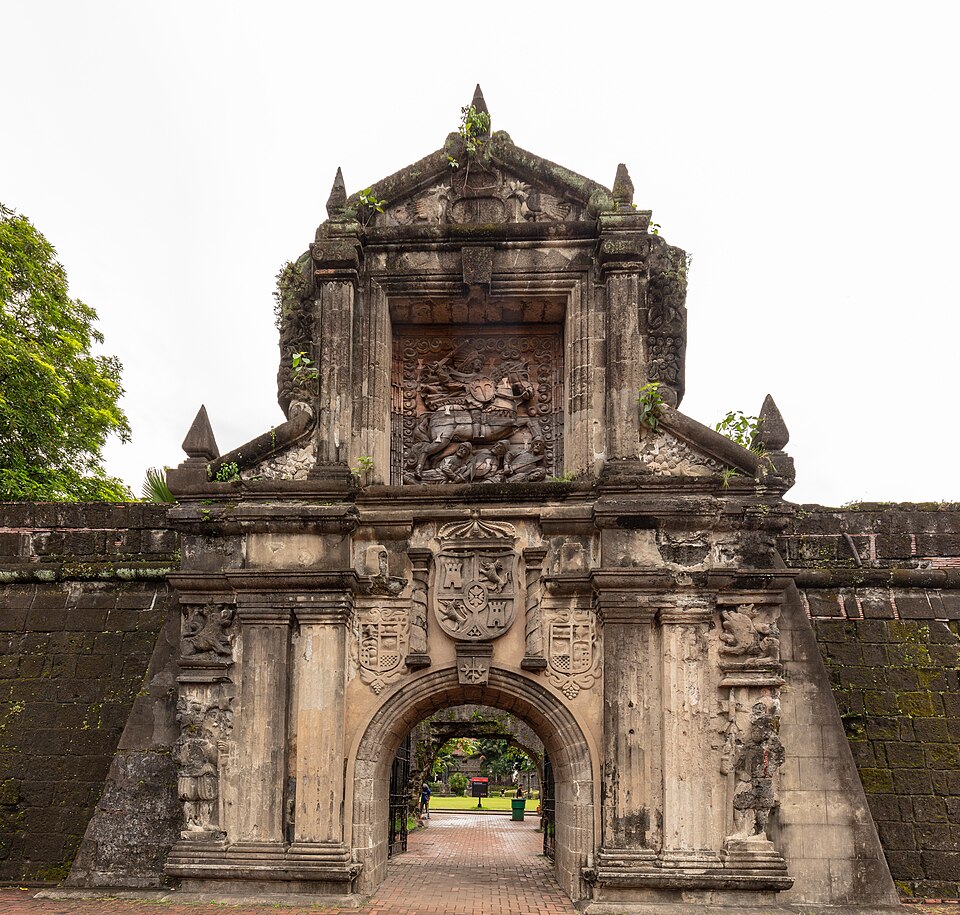
Located within the walled city of Intramuros, Fort Santiago is a citadel built by the Spanish in the late 16th century as a military defense fortress. It remains as one of the most important reminders of Spanish colonial rule in the Philippines, having witnessed centuries of conflict, occupation, and resistance. Most notably, the fort is deeply connected to national hero José Rizal, who was imprisoned here before his execution in 1896, making the site a symbol of Filipino nationalism and sacrifice.

Because of its past as a war prison, Fort Santiago is closely linked to ghost stories and urban legends, with some visitors experiencing sudden chills, seeing apparitions, and hearing cries and whispers in the dungeon.

History & Heritage: How Fort Santiago Shaped a Nation

Fort Santiago's history dates back to 1571, when Spanish conquistador (conqueror) Miguel López de Legazpi ordered the construction of the fort on the site of a former palisaded fortress. As part of the walled city of Intramuros, the fort served as a military garrison guarding the Pasig River and Manila Bay.

Throughout the Spanish colonial period, it also functioned as a prison for suspected rebels and enemies of the state, including national hero José Rizal in 1896. Rizal was imprisoned in its dungeons after being falsely accused of rebellion and sedition, and was then executed at Bagumbayan (now Luneta Park). His incarceration at Fort Santiago transformed the site into a symbol of revolutionary awakening, linking it to the Philippine struggle for independence. During the Philippine Revolution and the American colonial period, the fort continued to play a strategic military role.

During World War II, Fort Santiago suffered extensive damage under Japanese occupation when it was used as a prison and site of atrocities, including the infamous Manila massacre. The Battle of Manila in 1945 left much of the fort in ruins, although it was restored as part of the Rizal National Monument in the postwar years. Today, Fort Santiago stands as a testament to Filipino resilience and as a place of remembrance, education, and reflection.

Plan Your Visit to Fort Santiago

Opening Hours

Day Opening Hours Last Entry
Monday to Friday 8:00 am to 10:00 pm 8:00 pm
Saturday to Sunday 6:00 am to 10:00 pm 8:30 pm

Take note that certain guided tours are allowed inside the fort after the last entry.

Entry Fees

Ticket type Price
Regular 75 PHP
Students, Senior Citizens, Persons with Disabilities 50 PHP

How to Get to Fort Santiago

By Train

Fort Santiago is located within Intramuros, Manila, a popular tourist destination. To get there, take the LRT-1 train and alight at any of the three stations: Central Station, Carriedo Station, or Doroteo Jose Station. The entrance to the fort is through Plaza Moriones.

If you get off at Central Station, you can walk to Intramuros, with the Manila City Hall serving as your landmark. The Carriedo LRT Station is another option, but you'll have to take a Pier-bound jeepney and ask the driver to drop you off at Intramuros. If you choose to alight at Doroteo Jose Station, you'll have to ride a Baclaran-bound jeepney and ask to be dropped off at Intramuros. At Intramuros, you can ask for directions to Plaza Moriones.

By Bus

Buses are another affordable option to get to Fort Santiago, although there are no direct buses that stop directly at the fort. Take any of the buses that loop around Manila and get off at the Manila City Hall bus stop or at the Central Station, which are near Intramuros. From there, you can walk to Plaza Moriones, leading to the fort.

By Car

Fort Santiago is accessible by private car, and there are pay parking sites near the fort. However, some streets around Intramuros are closed for pedestrian use.

Best Time to Visit

The best time to visit Fort Santiago is during weekday mornings, from 8:00 am to 10:00 to avoid the Manila heat and crowds. Afternoon is also an ideal time to visit to enjoy the sunset and thinning crowds. If weekends are the only feasible dates to visit, make sure to visit in the morning before tourist and field trip crowds arrive.

For ideal weather, plan your visit from December to May for cooler temperatures, although March to May may have warmer temperatures. June to November may not be as ideal due to heavy rainfall and typhoons.

Dress Code

Since exploring Fort Santiago involves plenty of walking, wear comfortable sneakers or sandals. Make sure to bring an umbrella and a portable fan for light showers or for heat protection.

If you plan on visiting nearby religious sites like San Agustin Church or Manila Cathedral, wear modest clothing out of respect. Ensure that knees and shoulders are covered, or bring a light shawl as a cover-up.

Other Visitor Tips and Recommendations

  • During certain months, join night tours around Fort Santiago. Led by local tour operators, these tours show a different side of the fort, often involving urban legends and ghost stories from the fort's dark past.

  • Manila's weather can be hot and humid, especially during the summer months. Stay hydrated and always carry water, an umbrella, and a portable fan.

  • Aside from Fort Santiago, visit other attractions in Intramuros, including the Manila Cathedral, Casa Manila, and Baluarte de San Diego.

  • Avoid touching exhibits and preserved structures.

  • As you explore the fort, keep an eye out for the markers explaining what the site is about and its significance.

  • Because of its riverside location, be aware of potential odors from the river area.

  • If you plan on exploring around Intramuros, consider renting a bamboo bike for easier navigation since most streets are closed for pedestrian use.

Nearby Accommodations

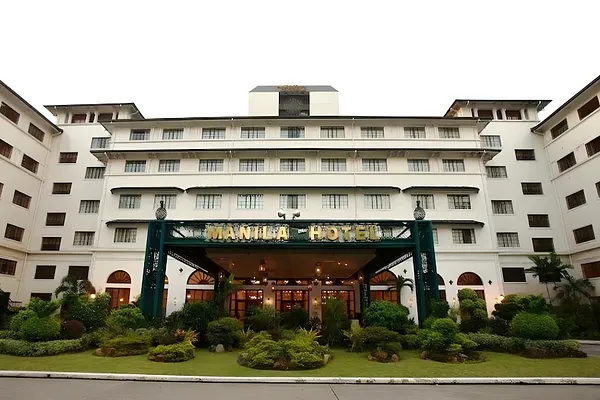
The Manila Hotel

🏛️ Built: 1912

The Manila Hotel is a timeless icon of Filipino heritage and luxury, proudly standing since 1912. Built and renovated by architects like Andres Luna and National Artist Leandro Locsin, the hotel combines American elegance and Filipino traditional design. With its historic charm and world-class service, the Manila Hotel has hosted dignitaries, celebrities, and has seen unforgettable events for over a century. Guests enjoy cultural experiences and modern amenities like a wellness center, pool, and spa. Whether dining at the romantic Champagne Room or celebrating an intimate gathering, every moment is infused with Filipino warmth and sophistication. The Manila Hotel remains a premier destination where tradition meets excellence, offering a meaningful and memorable stay in the heart of Manila. 

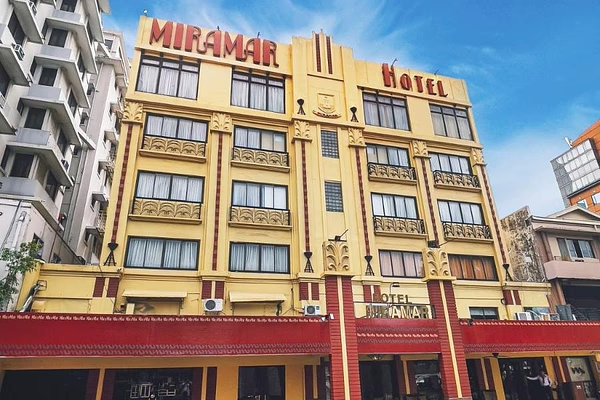
Miramar Hotel

🏛️ Built: 1932

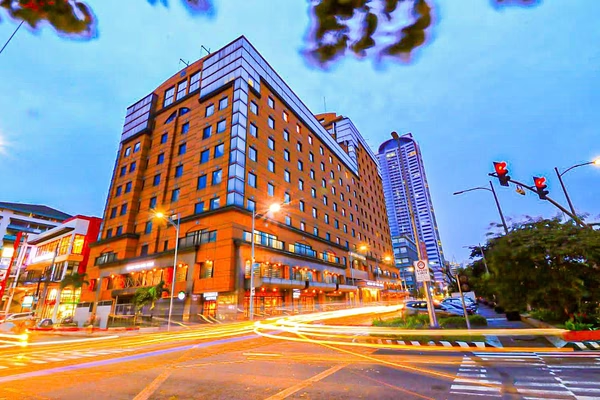
Established in 1932 during the Philippine Commonwealth, Miramar Hotel remains an enduring icon of Manila from the early 20th century.  Back then, it was called the Miramar Apartments, where the city's elite lived in sought-after luxury residences. Nearly a century later, the building has been renewed to its classic Art Deco splendor, with spaces and accommodations decorated in stylish vintage furniture. They even restored the original elevator, said to be the first and oldest in operation in Manila! Miramar Hotel's location is also one of the best in the city, as it's close to major attractions such as Luneta Park and Manila Ocean Park, as well as major transportation hubs like Ninoy Aquino International Airport.

The Henry Hotel Manila

🏛️ Built: 1948

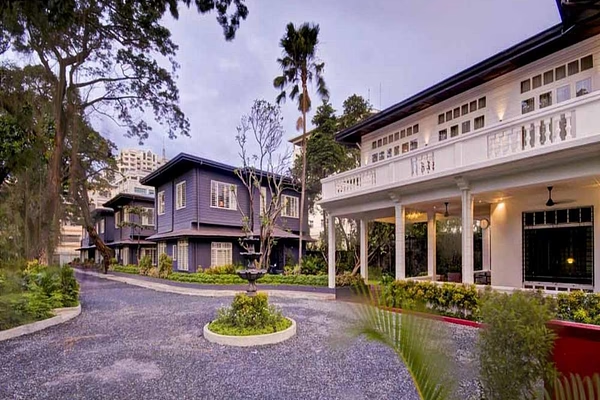
Back in 1948, this estate was a beautiful mansion compound built during the reconstruction of Manila, right after the Second World War. Today, it is known as The Henry Hotel Manila, a gorgeous Old World oasis hiding in Metro Manila. The property consists of five post-war homes, all of which have been modernized and touched up, yet retain or have been restored to their original architecture. Eschewing typical hotel experiences, you'll feel right at home here, relaxing by the garden pool and hanging out in the library. There's also the on-site restaurant, Apartment 1B, where you can dine like Manila's elite did during the mid-20th century. Creative souls can nourish their spirit by visiting the nearby galleries in the neighborhood.

Rizal Park Hotel

🏛️ Built: 1911

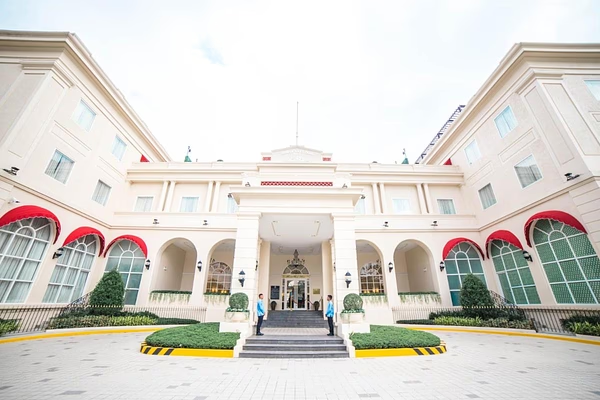
Nestled at the heart of Manila, the Rizal Park Hotel is a heritage hotel housed in the restored 1911 Army and Navy Club, once an exclusive social hub for American officers. Blending neoclassical architecture with modern comforts, the hotel offers elegant accommodations, an infinity pool, a wellness spa, and stylish dining establishments. Ideal for weddings, celebrations, and corporate events, its heritage-inspired function spaces provide a timeless setting. Located beside Rizal Park and near Manila’s cultural landmarks, the hotel offers easy access to museums and the iconic Manila Bay. Rich in history and charm, Rizal Park Hotel delivers a uniquely Filipino hospitality experience in a historic setting, where the past and present meet. 

Bayview Park Hotel Manila

🏛️ Built: 1935

If you need a convenient and lovely place to stay while visiting Manila, consider the Bayview Park Hotel along Roxas Boulevard. Situated in the middle of many major attractions, you can easily enjoy trips to museums and parks at almost any time you want. However, the hotel isn't just renowned for its location; it's also recognized for its history of exceptional hospitality. Since it was rebuilt in 1935, the Bayview Park Hotel has kept up with modern trends, updating rooms and facilities with the latest amenities. When you're not out and about exploring the city, you can savor delectable Filipino cuisine at the restaurant or buffet service, or unwind with a dip in the swimming pool.

Map of all Philippines properties

Looking to connect with the Philippines’ fascinating past? Find historic stays and heritage hotels in the Philippines that bring history and culture to life. Browse All Properties