



Kawachinagano Select dates Select guests
Search
2
0
1

Nanten-En

Ryokans Ryokans are traditional Japanese inns known for native architecture, authentic cuisine—especially kaiseki-ryouri dinners—and serene onsen baths. Often run by the same family for generations, they preserve Japan’s rich hospitality heritage and offer an immersive cultural experience Choose a ryokan from our list for an authentic experience! 
Interwar & Early Modern Heritage Every historic hotel tells a unique tale of its time. From Renaissance’s Gothic cathedrals to Japanese simplicity, each location reflects the culture, way of life, and architectural style of its era. This property belongs to Interwar & Early Modern Heritage. Click to know more about this period.
4-Star
Amami 158, 586-0062 Kawachinagano, Japan
$210.00 /night for 2 adults View Deal

Highlights

Declared a Tangible Cultural Property in 2003 for its architecture

Popular Amenities

  • Garden
  • Family rooms
  • Air conditioning

Overview

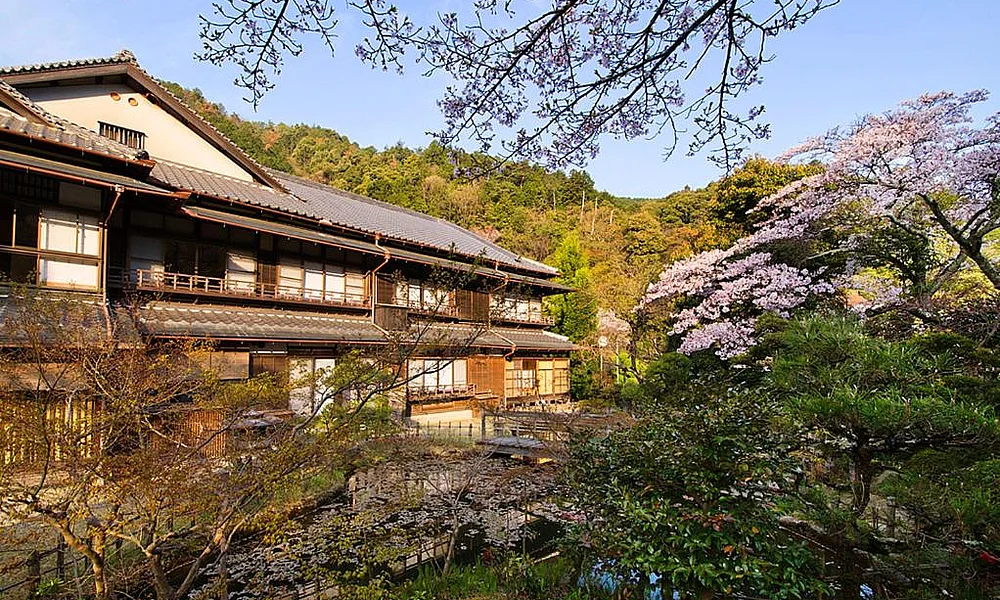
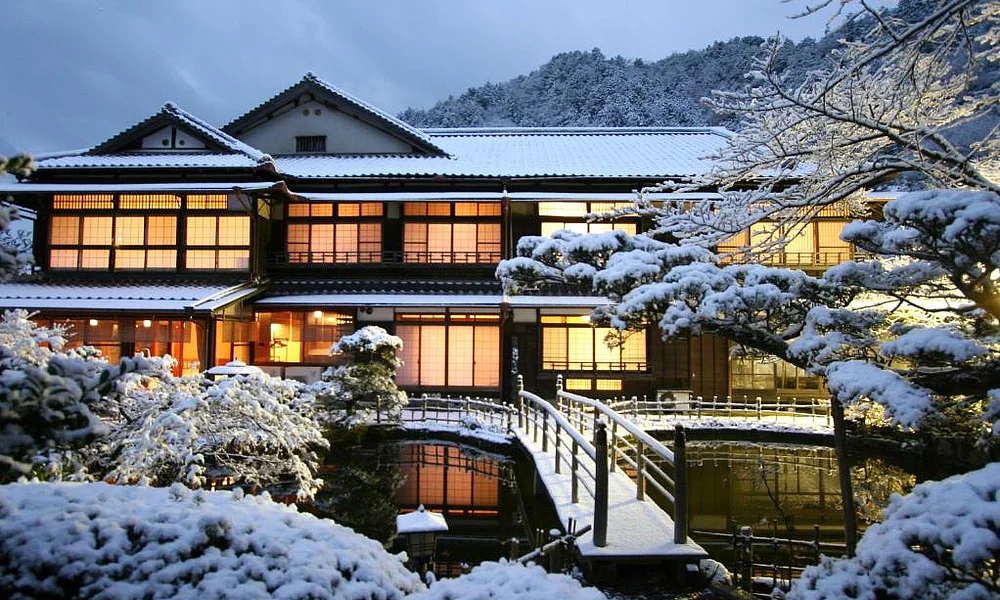
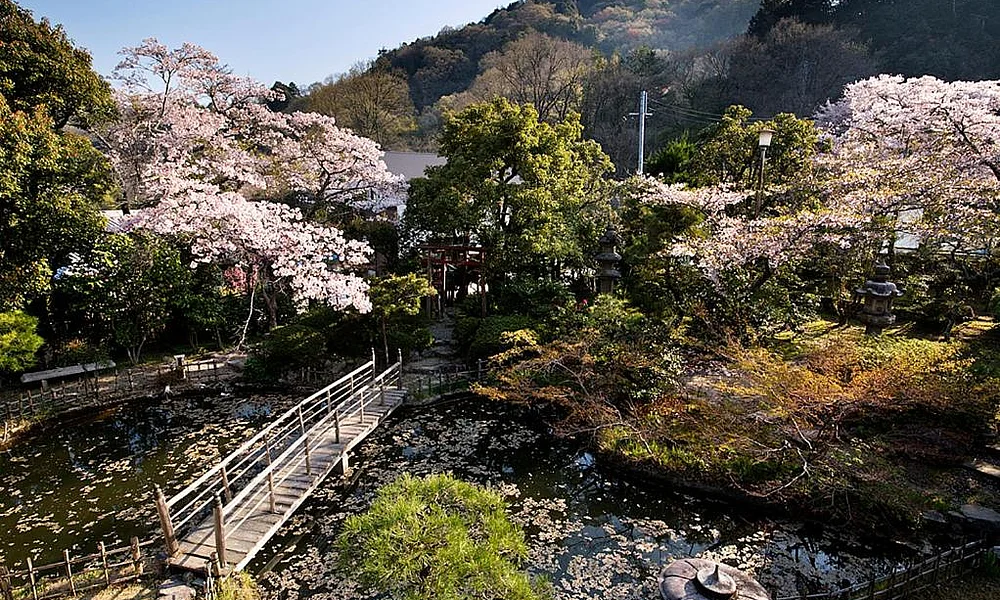
Nanten-en is a beautiful ryokan nestled amidst the natural splendor of Southern Osaka and promises a rejuvenating stay. It borders the Wakayama Prefecture and is bound by woods and hills on all sides, so it is the perfect place to enjoy all the seasons of Japan. The cherry blossoms come to life in the spring while fireflies crowd the garden in the summer. Autumn turns its 10,000-square-meter (107,640-square-foot) garden into fiery shades of red and orange, while winter sees the strong boughs buried by snow. 

Of course, the ryokan has onsens, with separate spaces for men and women. To experience the magic of an authentic Japanese stay, read on for details about Nanten-en!

"

Superb 9.4
363 reviews

map Amami 158, 586-0062 Kawachinagano, Japan
View in map

Local Info

Kanshin-ji
(7.5 km)
Enmei-ji
(7.4 km)
Eboshigata Hachiman Shrine
(6.8 km)
Nearest Airport
(47.2 km)
Nearest Railway Station
View All

History

Nanten-en has quite an interesting history going back over 100 years. Built in 1913 and designed by Kingo Tatsuno (the famous architect behind the Bank of Japan building and Tokyo Station and a student of Josiah Conder), the original wood structure was actually part of Shio-yu, an entertainment complex in Ohama, Sakai City, about 40 kilometers (24.8 miles) away from its current location. Nanten-en was actually an annex of the complex and was called the 'Family Bath', and was a place for families to play, rest, and bathe.

History
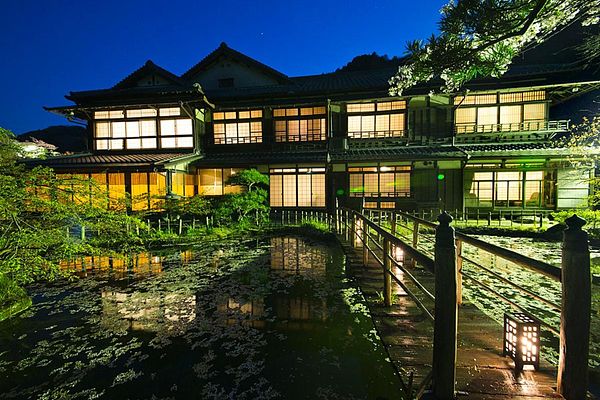
The ryokan by the pond

The structure was damaged during the Muroto Typhoon and was relocated to Amami in 1935 by train as part of a plan to develop the area as an onsen destination. The rest of the complex in Sakai City burned down during the war. The situation was equally grim for the new onsen destination as it had to put down the shutters due to the general refrain from extravagance practiced during the war, however, it reopened in 1949. Sadly, much of its history wasn't written down, and the tales of its illustrious past were passed down as only rumors, until an investigation by the Meiji Architecture Research Group. The effort bore fruit with the discovery of certain archival records of the Nankai Electric Railway, where the connection between Nanten-en and Shio-yu (the entertainment complex in Sakai City) was revealed. Accordingly, in 2003, it was awarded the status of a Tangible Cultural Property.

The property is currently run by Yukiko Yamasaki (the 'okami' or landlady of the ryokan) and Kazuhiro Yamasaki. After the conclusion of World War 2, Yukiko's father-in-law bought the building and it passed into the family.

Hotel image
Nanten-en in Winter

Design and Architecture

Hotel image
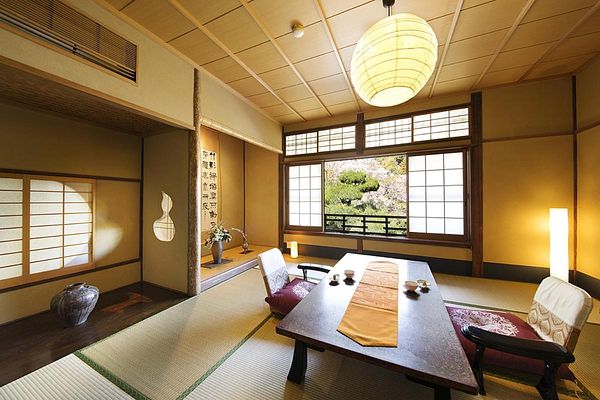
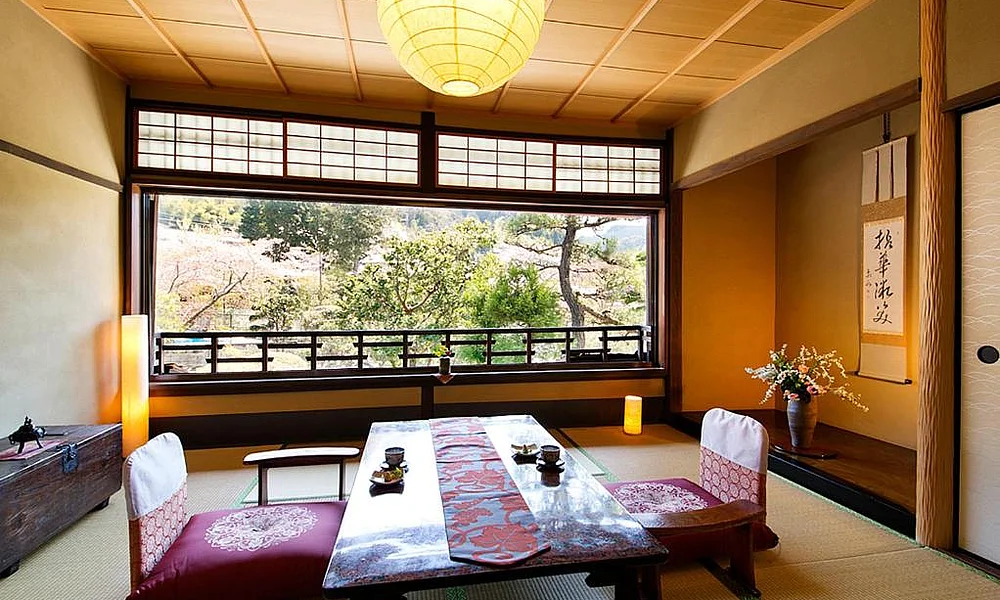
Traditional room with flower arrangement and scroll decor

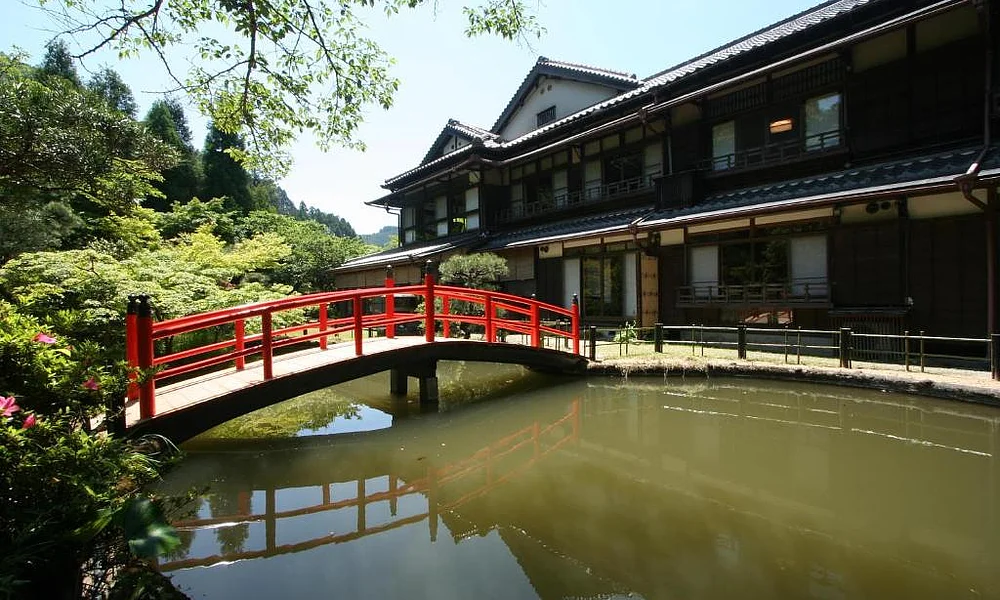
The garden is not to be outdone by the ryokan, and perhaps its centerpiece is the pond across which is a sleek bridge with red railing, perhaps harking towards the bridges in certain Shinto shrines.

Hotel image
The iconic red bridge across the pond

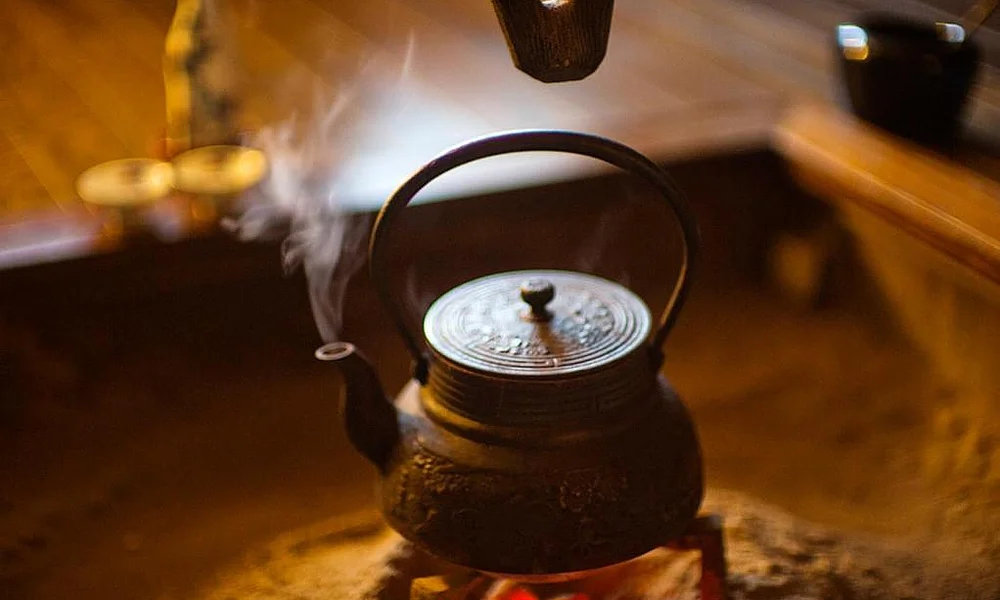
The Seiryuu-tei open-air hot spring annex is the most premium accommodation option, and its beautiful and authentic design features affirm the reasoning. The annex has an irori, which is a traditional sunken fireplace around which you can lounge or even prepare some tea. Of course, chabudai and tatami chairs are provided, as are sitting mats.

Hotel image
Irori

Amenities

Popular Amenities

  • Garden
  • Family rooms
  • Air conditioning

Rooms

Japanese-Style Economy Twin Room with Shared Bathroom


Guest

Room 2 Bed Type 7

Room size 10 m2

Price per night

$210.00

per night price includes taxes and charges
View deal

Japanese-Style Superior Quadruple Room with Shared Bathroom


Guest + 2

Room 4 Bed Type 7

Room size 23 m2

Price per night

$753.00

per night price includes taxes and charges
View deal

Japanese-Style Standard Twin Room with Shared Bathroom


Guest

Room 2 Bed Type 7

Room size 13 m2

Price per night

$305.00

per night price includes taxes and charges
View deal

Japanese-Style Family Room with Open-Air Bath


Guest + 4

Room 8 Bed Type 7

Room size 113 m2

Price per night

$2,483.00

per night price includes taxes and charges
View deal

Japanese-Style Standard Room with Shared Bathroom


Guest + 1

Room 4 Bed Type 7

Room size 15 m2

Price per night

$416.00

per night price includes taxes and charges
View deal

Japanese-Style Superior Room with Shared Bathroom


Guest

Room 3 Bed Type 7

Room size 16 m2

Price per night

$280.00

per night price includes taxes and charges
View deal

Quadruple Room with Shared Bathroom


Guest

Room 4 Bed Type 7

Room size 20 m2

Price per night

$530.00

per night price includes taxes and charges
View deal

Dining

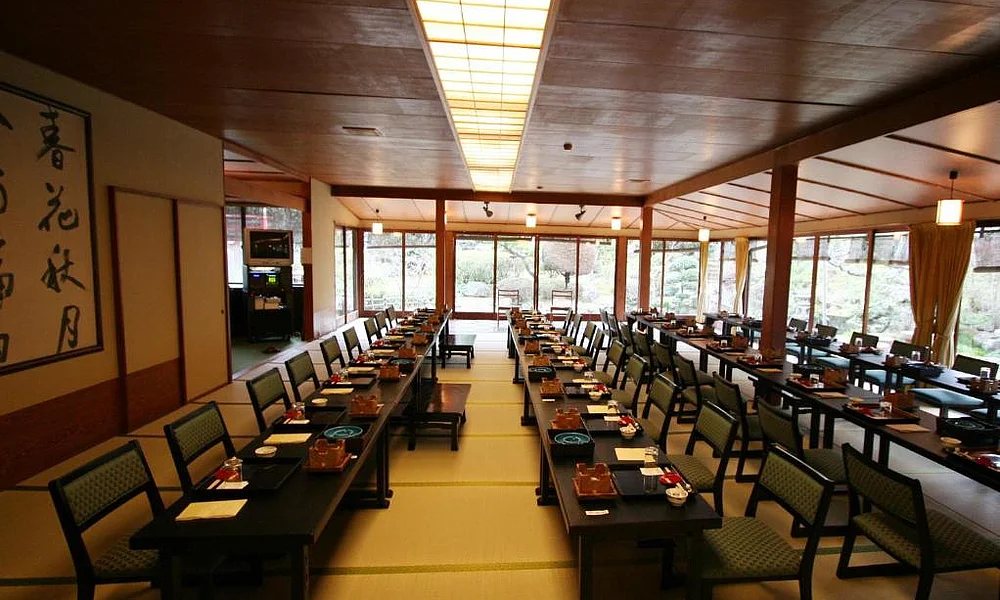
Shunju Banquet Hall

This is the ryokan's breakfast hall fitted with elegant furnishings and floor-to-ceiling windows.

Dining
Shunju Banquet Hall

Dinner

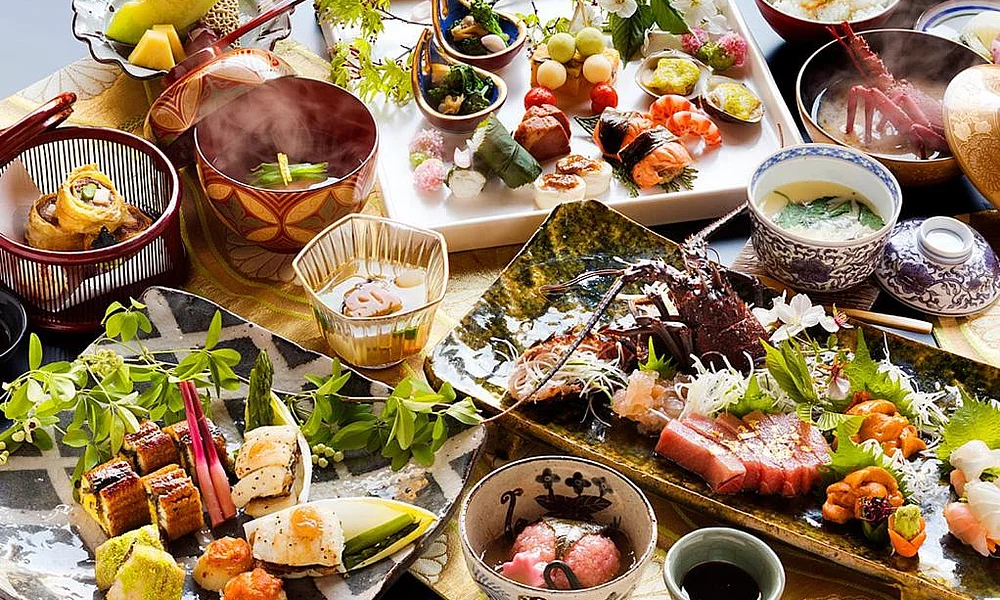
Washoku dishes are served kaiseki-style at this ryokan. The dishes are prepared from locally sourced seasonal ingredients so that the guests can savor the authentic taste of the region. Spring vegetables feature heavily in dishes from March through May, while summer sees a delectable selection of seafood and seasonal vegetables. Autumn sees the incorporation of matsutake and grilled beef in dishes, while winter is for nabemono (Japanese hot pot dishes). A la carte options are available as well and you can complement your meal with delicious sake or wine. Specialties include grilled Japanese black beef, live abalone, Yanagawa eel, kongo nabe, duck nabe, botan nabe, and grilled sweetfish with salt.

Vegetarian and halal dishes are available, and for any personal preferences, make sure to contact the hosts. Dinner is usually served in the room and will be delivered between 6 pm and 7 pm.

Hotel image
A delicious spread of dishes

Breakfast

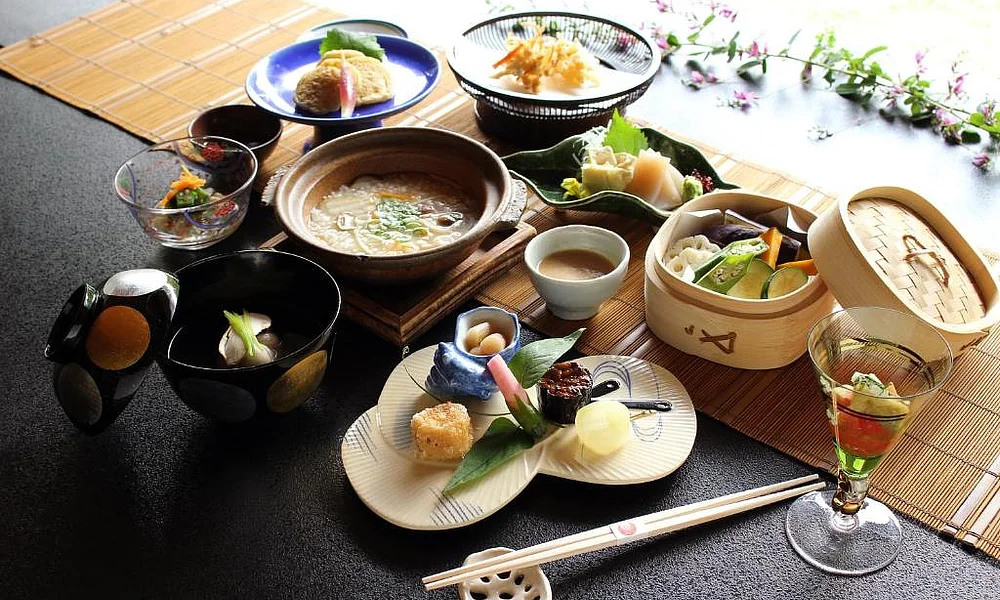
A traditional Japanese breakfast is provided here and you can expect a rolled omelet with rice and miso soup with fresh clams, however, the menu changes each month.

Hotel image
Meal with seasonal ingredients

Events and Experiences

Cultural Experiences

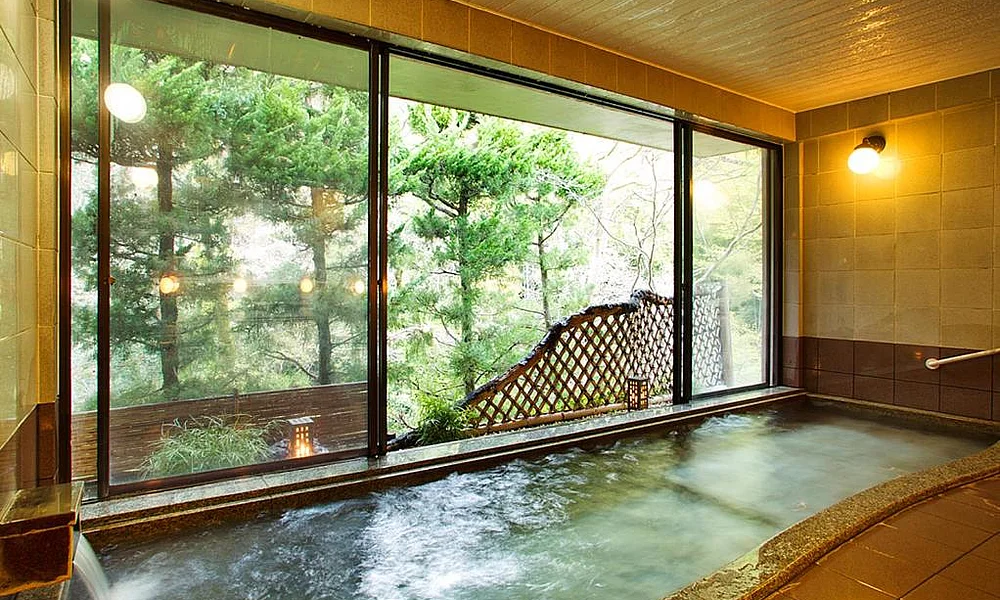
Kazuhiro Yamasaki, the owner of the property, is a famous Omotesenke tea master and organizes tea ceremonies for guests! His floral arrangements allow you to study the intricacies of the art from an expert. Yukata are loaned to guests so that they can take pretty photos and immerse themselves in Japanese culture. The natural-radium-rich onsens allow you to partake in an age-old Japanese tradition.

Book Venue
Events and Experiences
The onsen

Destination Wedding

Traditional Japanese weddings (called Shukugen) can be organized at this ryokan. The property frequently works with 'Shukugenya' a wedding planning company that specializes in organizing traditional Japanese weddings with packages. Wedding packages start from 505,000 JPY (3,400 USD) and include a family crest for the groom, white kimono for the bride, kimono dressing, hair styling, makeup, travel expenses, and a banquet meal for 10 people. Photography and florist services are available separately, and fees for the dressing room use and drinks are separate as well.

Book Venue
Destination Wedding
A beautiful space for a wedding ceremony

Cultural etiquette

  • Bowing (ojigi): It's advisable to bow to show respect when greeting someone. It can also be done to show gratitude or convey an apology.
  • Shoe etiquette: You must remove your outside footwear before stepping on the elevated area of the genkan (entrance) and entering a house. You should also ensure not to step on the lower area of the genkan without your shoes on. Shoes must be kept facing the entrance. If you wear socks, they should be clean and without any holes.
  • Slipper etiquette: It's usually better to wear fresh socks or slippers inside the house, especially for formal situations. Make sure to remove your slippers before stepping into a room with tatami mats on the floor. There should also be a separate set of slippers for the washroom.
  • Dining etiquette: How you hold and place your chopsticks while dining is crucial. For example, they shouldn't be held upright when eating rice. You must also place them on a holder when you're not using them. It's good to say "Itadakimasu" before starting a meal and "Gochisousama deshita" after completing it.
  • Tipping etiquette: Tipping isn't a common practice in Japan and may be considered rude.
  • Luggage etiquette: Luggage, especially those with wheels, should be carried instead of being dragged across the floor as it might damage the tatami mats or wooden flooring.
  • Photography etiquette: Photography rules can change from place to place, so make sure to check for signs or ask the staff before taking pictures anywhere.
  • Queueing etiquette: Make sure to maintain queues and never cut in line.
  • Onsen etiquette: Some onsens don't allow tattoos, so check with the staff before getting into one. You must also shower and be clean before entering a shared onsen bath.
  • Bathing etiquette: Japanese baths include separate areas for washing while the tub itself is meant only for soaking. This means bathers must first wash, scrub, and rinse themselves before entering the bath tub.

Local Info

Kanshin-ji

7.5 km

Historic temple founded by En no Ozunu, hosting multiple artifacts deemed as national treasures. (11-minute drive)

Enmei-ji

7.4 km

Temple famous for its Twilight Maple trees said to have been planted by the famous monk Kōbō Daishi. (15-minute drive)

Eboshigata Hachiman Shrine

6.8 km

A small Shinto shrine beside the beautiful Eboshigata Park. (13-minute drive)

Nearest Airport

47.2 km

The nearest airport to Nanten-en is Kansai International Airport, which is a 50-minute drive away.

Nearest Railway Station

The hotel is only a 2-minute walk from Amami Station.

Frequently Asked Questions

You Might Also Like

Izuki Machiya House
1 km from airport This is a straight-line distance from Kyoto. Actual travel distance may vary.

Izuki Machiya House

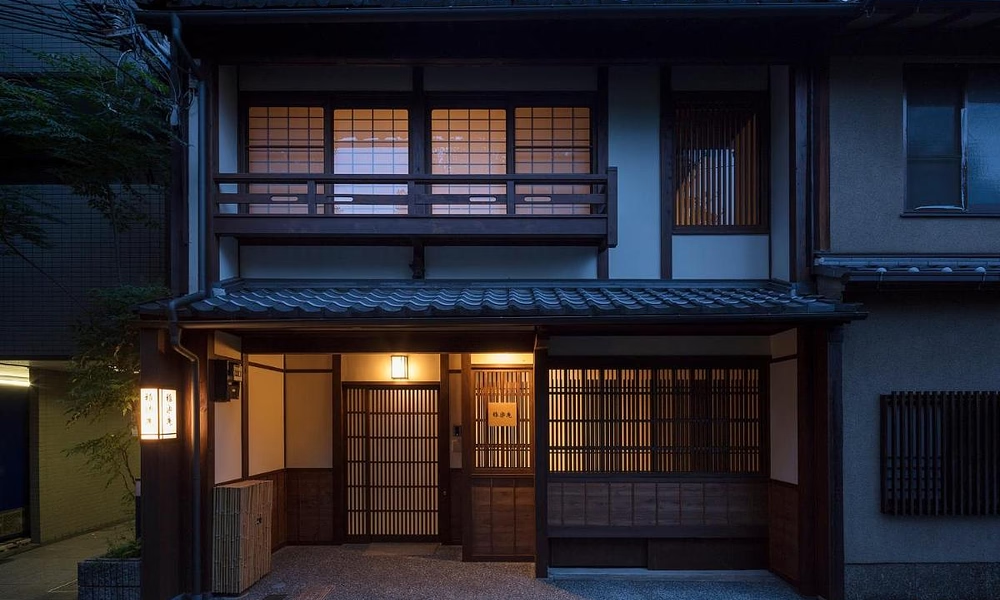
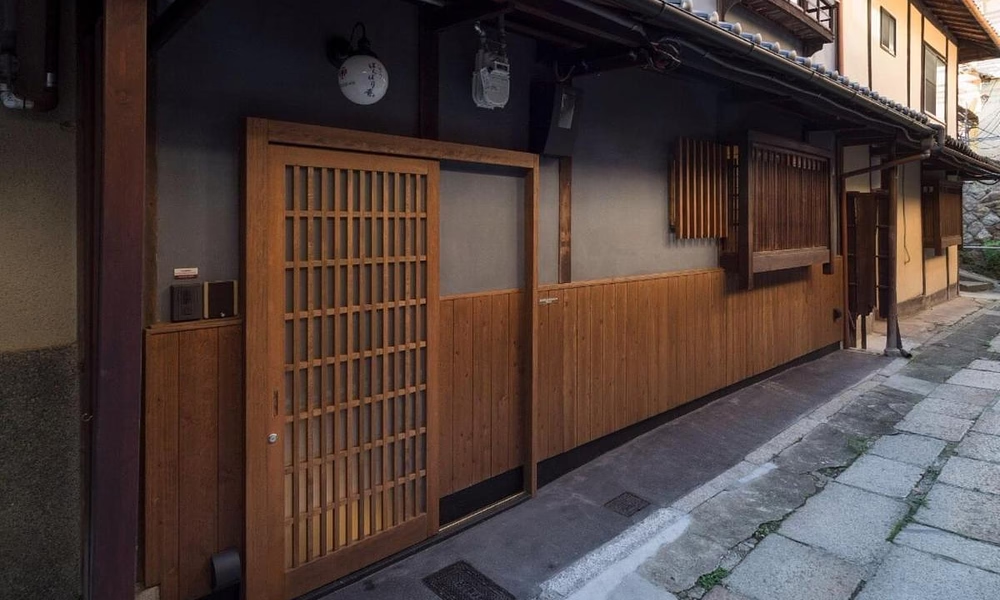
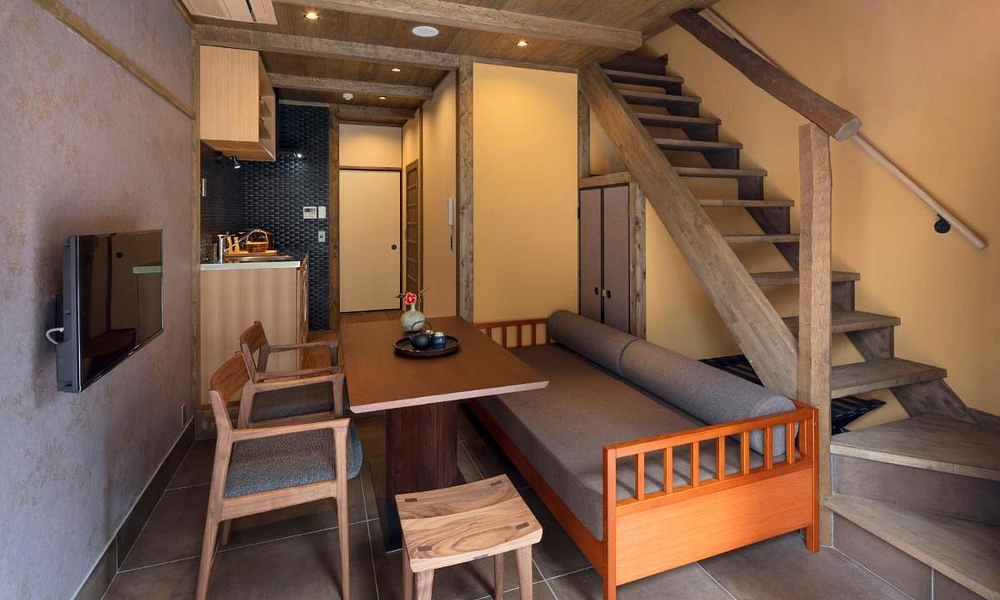
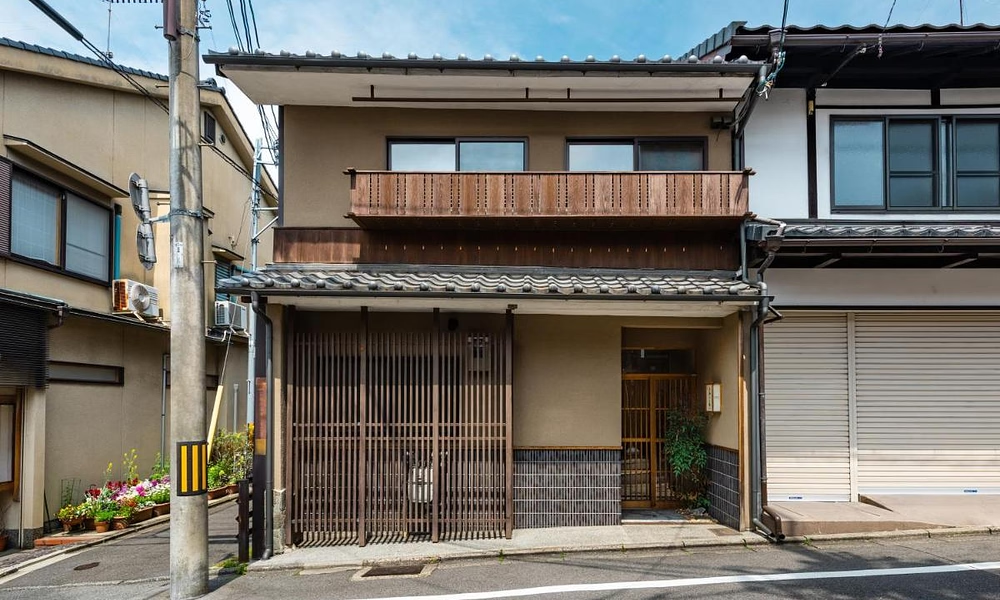
Machiya  Machiya are traditional Japanese townhouses, especially in Kyoto, but also found in Naraijuku, Kanazawa, Takayama, and Kurashiki. Although construction ceased after the 1950 Building Standards Act, many historic machiya remain, offering visitors a glimpse into Japan’s architectural heritage. Check our list of machiyas for a memorable vacation! 
4-Star 9.7
Early Modern & Colonial Expansion Every historic hotel tells a unique tale of its time. From Renaissance’s Gothic cathedrals to Japanese simplicity, each location reflects the culture, way of life, and architectural style of its era. This property belongs to Early Modern & Colonial Expansion. Click to know more about this period.
珠数屋町112, 600-8348 Nishi-kujō-Toriiguchichō, Japan
$335.00 total
Akane an Machiya House
1 km from airport This is a straight-line distance from Kyoto. Actual travel distance may vary.

Akane an Machiya House

Machiya  Machiya are traditional Japanese townhouses, especially in Kyoto, but also found in Naraijuku, Kanazawa, Takayama, and Kurashiki. Although construction ceased after the 1950 Building Standards Act, many historic machiya remain, offering visitors a glimpse into Japan’s architectural heritage. Check our list of machiyas for a memorable vacation! 
4-Star 7.7
Industrial & Imperial Era Every historic hotel tells a unique tale of its time. From Renaissance’s Gothic cathedrals to Japanese simplicity, each location reflects the culture, way of life, and architectural style of its era. This property belongs to Industrial & Imperial Era. Click to know more about this period.
Nakagyo-ku Kaji-cho 172-14, 604-8267 Kyoto, Japan
$235.00 total
Hinaya Higashiyama Machiya House
30 km from airport This is a straight-line distance from Komatsu Airport. Actual travel distance may vary.

Hinaya Higashiyama Machiya House

Machiya  Machiya are traditional Japanese townhouses, especially in Kyoto, but also found in Naraijuku, Kanazawa, Takayama, and Kurashiki. Although construction ceased after the 1950 Building Standards Act, many historic machiya remain, offering visitors a glimpse into Japan’s architectural heritage. Check our list of machiyas for a memorable vacation! 
4-Star 9.0
Industrial & Imperial Era Every historic hotel tells a unique tale of its time. From Renaissance’s Gothic cathedrals to Japanese simplicity, each location reflects the culture, way of life, and architectural style of its era. This property belongs to Industrial & Imperial Era. Click to know more about this period.
Higashiyama 3-31-10, 920-0831 Kanazawa, Japan
$313.00 total
Garaku-an Machiya
2 km from airport This is a straight-line distance from Kyoto. Actual travel distance may vary.

Garaku-an Machiya

Machiya  Machiya are traditional Japanese townhouses, especially in Kyoto, but also found in Naraijuku, Kanazawa, Takayama, and Kurashiki. Although construction ceased after the 1950 Building Standards Act, many historic machiya remain, offering visitors a glimpse into Japan’s architectural heritage. Check our list of machiyas for a memorable vacation! 
4-Star 9.0
Early Modern & Colonial Expansion Every historic hotel tells a unique tale of its time. From Renaissance’s Gothic cathedrals to Japanese simplicity, each location reflects the culture, way of life, and architectural style of its era. This property belongs to Early Modern & Colonial Expansion. Click to know more about this period.
Shimogyo-ku Minamikyogoku-cho 74-1, 600-8117 Kyoto, Japan
$542.00 total
Bonbori-an Machiya House
3 km from airport This is a straight-line distance from Kyoto. Actual travel distance may vary.

Bonbori-an Machiya House

Machiya  Machiya are traditional Japanese townhouses, especially in Kyoto, but also found in Naraijuku, Kanazawa, Takayama, and Kurashiki. Although construction ceased after the 1950 Building Standards Act, many historic machiya remain, offering visitors a glimpse into Japan’s architectural heritage. Check our list of machiyas for a memorable vacation! 
4-Star 9.4
Early Modern & Colonial Expansion Every historic hotel tells a unique tale of its time. From Renaissance’s Gothic cathedrals to Japanese simplicity, each location reflects the culture, way of life, and architectural style of its era. This property belongs to Early Modern & Colonial Expansion. Click to know more about this period.
Higashiyama-ku Yasaka Kamimachi 374-10 , 605-0827 Kyoto, Japan
$371.00 total
Hanagoromo Machiya House
2 km from airport This is a straight-line distance from Kyoto. Actual travel distance may vary.

Hanagoromo Machiya House

Machiya  Machiya are traditional Japanese townhouses, especially in Kyoto, but also found in Naraijuku, Kanazawa, Takayama, and Kurashiki. Although construction ceased after the 1950 Building Standards Act, many historic machiya remain, offering visitors a glimpse into Japan’s architectural heritage. Check our list of machiyas for a memorable vacation! 
4-Star 8.6
Industrial & Imperial Era Every historic hotel tells a unique tale of its time. From Renaissance’s Gothic cathedrals to Japanese simplicity, each location reflects the culture, way of life, and architectural style of its era. This property belongs to Industrial & Imperial Era. Click to know more about this period.
Shimogyo-ku Shimozaimokucho 446, 600-8017 Kyoto, Japan
$242.00 total
Choya Chawanzaka Machiya House
3 km from airport This is a straight-line distance from Kyoto. Actual travel distance may vary.

Choya Chawanzaka Machiya House

Machiya  Machiya are traditional Japanese townhouses, especially in Kyoto, but also found in Naraijuku, Kanazawa, Takayama, and Kurashiki. Although construction ceased after the 1950 Building Standards Act, many historic machiya remain, offering visitors a glimpse into Japan’s architectural heritage. Check our list of machiyas for a memorable vacation! 
4-Star 9.5
Industrial & Imperial Era Every historic hotel tells a unique tale of its time. From Renaissance’s Gothic cathedrals to Japanese simplicity, each location reflects the culture, way of life, and architectural style of its era. This property belongs to Industrial & Imperial Era. Click to know more about this period.
Higashiyama-ku Gojobashihigashi 6-583-51, 605-0846 Kyoto, Japan
$378.00 total
Kohaku-an Machiya House
3 km from airport This is a straight-line distance from Kyoto. Actual travel distance may vary.

Kohaku-an Machiya House

Machiya  Machiya are traditional Japanese townhouses, especially in Kyoto, but also found in Naraijuku, Kanazawa, Takayama, and Kurashiki. Although construction ceased after the 1950 Building Standards Act, many historic machiya remain, offering visitors a glimpse into Japan’s architectural heritage. Check our list of machiyas for a memorable vacation! 
4-Star 9.3
Industrial & Imperial Era Every historic hotel tells a unique tale of its time. From Renaissance’s Gothic cathedrals to Japanese simplicity, each location reflects the culture, way of life, and architectural style of its era. This property belongs to Industrial & Imperial Era. Click to know more about this period.
Higashiyama-ku Sennyuji Suzumegamori-cho 3-8, 605-0975 Kyoto, Japan
$206.00 total
Suigetsu Machiya House
2 km from airport This is a straight-line distance from Kyoto. Actual travel distance may vary.

Suigetsu Machiya House

Machiya  Machiya are traditional Japanese townhouses, especially in Kyoto, but also found in Naraijuku, Kanazawa, Takayama, and Kurashiki. Although construction ceased after the 1950 Building Standards Act, many historic machiya remain, offering visitors a glimpse into Japan’s architectural heritage. Check our list of machiyas for a memorable vacation! 
4-Star 8.5
Industrial & Imperial Era Every historic hotel tells a unique tale of its time. From Renaissance’s Gothic cathedrals to Japanese simplicity, each location reflects the culture, way of life, and architectural style of its era. This property belongs to Industrial & Imperial Era. Click to know more about this period.
Higashiyama-ku Kadowakicho 187-5, 605-0843 Kyoto, Japan
$299.00 total
Nadeshiko Shirakawa Machiya
3 km from airport This is a straight-line distance from Kyoto. Actual travel distance may vary.

Nadeshiko Shirakawa Machiya

Machiya  Machiya are traditional Japanese townhouses, especially in Kyoto, but also found in Naraijuku, Kanazawa, Takayama, and Kurashiki. Although construction ceased after the 1950 Building Standards Act, many historic machiya remain, offering visitors a glimpse into Japan’s architectural heritage. Check our list of machiyas for a memorable vacation! 
4-Star 9.0
Industrial & Imperial Era Every historic hotel tells a unique tale of its time. From Renaissance’s Gothic cathedrals to Japanese simplicity, each location reflects the culture, way of life, and architectural style of its era. This property belongs to Industrial & Imperial Era. Click to know more about this period.
Higashiyama-ku Minamikinomoto-cho 539-6, 605-0015 Kyoto, Japan
$214.00 total

Customer Reviews

Dining

The 11-course dinner was amazing! We (father and two young adult sons) loved our stay very much.