



Minobu Select dates Select guests
Search
2
0
1

Kishinobo

Temple Stays & Monasteries Shintoism’s reverence for nature and Buddhism’s quest for inner peace led to shrines and temples in remote areas. To shelter pilgrims overnight, temple lodgings called shukubo were built. Today, they offer spiritual retreats with prayer readings and meditation. Experience tranquility at a historic shukubo—explore our curated list of serene temple stays and monasteries! 
High Medieval to Renaissance Every historic hotel tells a unique tale of its time. From Renaissance’s Gothic cathedrals to Japanese simplicity, each location reflects the culture, way of life, and architectural style of its era. This property belongs to High Medieval to Renaissance. Click to know more about this period.
3-Star
3591 Minobu, Minamikoma District, Yamanashi 409-2524, Japan
$383.00 /night for 2 adults View Deal

Overview

Mount Minobu, one of Nichiren Buddhism’s sacred mountains, is an interesting place that possesses accommodations for travelers. Kishi-no-bo, a branch temple of Mount Minobu, provides lodging for curious travelers. More than five centuries old, the temple offers an opportunity to experience a unique kind of traditional Japanese hospitality, with staff and services being provided by the resident monks of the area. Guests can engage in activities like observing morning services at temples, physical and spiritual exercises, and arts and crafts, with the guidance of its residents. Visitors can also dine on tastefully crafted meals by the temple’s staff that feature local ingredients. Kishi-no-bo offers a tranquil retreat experience tied to Japanese culture and the natural scenic beauty of Mount Minobu.

Exceptional 10.0
4 reviews

map 3591 Minobu, Minamikoma District, Yamanashi 409-2524, Japan
View in map

Local Info

Mount Minobu
Minobusan Kuonji
Okunoin Shishinkaku Temple
Nearest Airport
Nearest Railway Station
View All

History

Kishi-no-bo's history began on June 15, 1450, during the Hotoku period, when it was founded by Nisshin Shonin. As a teenager, he became a disciple of a monk and dedicated his life to missionary work. Despite experiencing significant hardships, he would persevere and succeed in his dream of serving at a mausoleum of Nichiren. The hermitage he established would become the temple that we know today. As a branch temple of Mount Minobu, it has served as a place of spiritual significance and lodging for visitors for centuries.

This rich history is interwoven with the traditions of Mount Minobu and the teachings of Nichiren Buddhism, even now, with many temple houses dotted around the sacred mountain. Kishi-no-bo has witnessed the passage of time, welcoming countless pilgrims and travelers seeking solace and connection with Japanese culture, with the current temple stay operating to help visitors seeking to worship at the mountain. It continues on today as a living reminder of both the sacred importance of Mount Minobu and the welcoming spirit of Japanese hospitality.

History
Kishinobo exterior Hotelscom

Design and Architecture

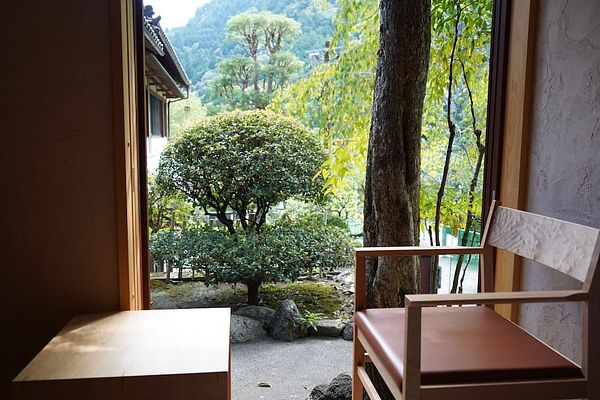
The shukubo's aesthetics seamlessly blend traditional Japanese temple design with more modern and functional lodging elements, to create a serene yet comfortable environment. Its buildings can be appreciated for their simplicity and authenticity, utilizing natural materials such as wood, paper, and stone that appropriately match the surrounding lands of Mount Minobu. The main structures feature gently sloping tiled roofs, wide eaves, and meticulously crafted wooden joinery, showing how even in modern times, construction hews closely to tradition.

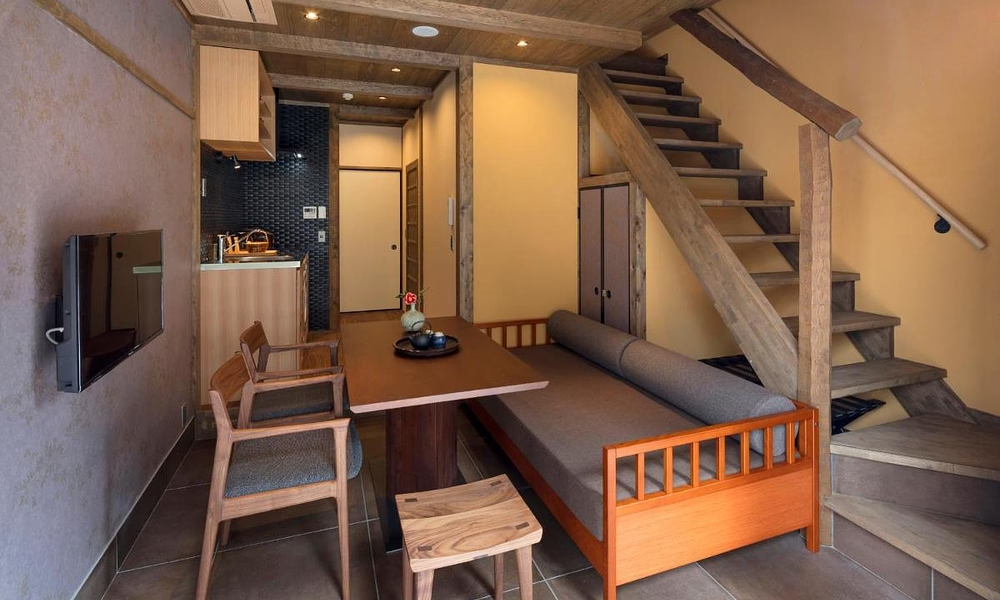
With regard to the interior, visitors would find themselves accommodated in simple and understated tatami-matted rooms with sliding shoji screens and carefully arranged ikebana flower displays that are emblematic of traditional Japanese interior design. However, these rooms are well-furnished with modern amenities, such as individual toilets, showers, and bathtubs, flatscreen televisions, and air-conditioning. The furniture is similarly subdued, and combined with subtly decorated fusuma doors to separate rooms, allow for visitors to make flexible arrangements. This aesthetic pattern is dutifully maintained even in other parts of the interior, such as corridors, lobbies, and dining places.

Hotel image
Room interiors in the shukubo Hotelscom

Amenities

Dining

The dining experience at Kishi-no-bo reflects the monk’s dedication towards simplicity and authenticity by way of gentle flavors and fresh, local ingredients. The cuisine emphasizes seasonal produce and also a unique emphasis on 'yuba,' a local specialty made in Minobu.

Meals are served three times a day, breakfast at 7:00 AM, lunch at 11:00 AM, and dinner from 5:00 to 8:00 PM. The shukubo also accommodates various budgets and dietary preferences, offering Shojin cuisine (vegetarian Buddhist cuisine) upon request. Visitors can expect the staple ingredients of Japanese cuisine alongside the local flair, with dishes being mainly based on fish, rice, tofu, and vegetables, among others.

Meals are served in a serene and comfortable environment, with communal dining spaces allowing for both Western and Japanese style seating arrangements allowing guests to enjoy not only the food but also the broader peaceful atmosphere.

Dining
Generous meal spread served at Kishinobo Hotelscom

Events and experiences

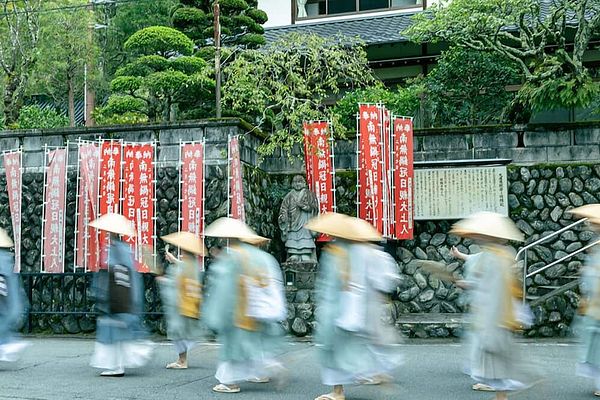
Kishi-no-bo offers travelers a rather unique set of experiences that would help greatly towards engaging guests in Japanese culture and spirituality. Just at the start of the day, guests already have the chance to observe the early morning services at Mount Minobu's Kuonji. There is also an opportunity to join in shukubo yoga sessions for 1 to 2 hours

For those who may want to have an even more hands-on role, guests can also partake in sutra copying, specifically of the Lotus Sutra, that helps in promoting a sense of mindfulness and encourages inner peace. Another activity that visitors may want to undertake is the crafting of bracelet rosaries, a common accessory in Buddhism that imbue a protective charm and are made out of stones and wooden beads.

In terms of souvenirs, the shukubo also sells to visitors temple stamps known as goshuin, and written prayers known as gosyudai, for a certain amount of fees or donations. For those more practically-minded, visitors could buy burn plasters, having been inspired by the hardships of NIsshin Shonin, and the plum essence ume no sei to aid in digestion.

Book Venue
Events and experiences
Join different activities and cultural experiences Hotelscom

Local Info

Mount Minobu

One of Japan’s most sacred Buddhist mountains, and on a clear day, visitors could see Mt. Fuji from the peak and even rivers flowing into the Pacific Ocean. (2-hour or more hike)

Minobusan Kuonji

A five layered red pagoda, with a 400 year old cherry blossom tree right next to it. It also contains Nichren’s grave site. (13-minutes away on foot)

Okunoin Shishinkaku Temple

Located at the peak of Mount Minobu, the temple was often visited by Nichiren to commemorate his parents and his master. (reached in the same way as Mount Minobu)

Nearest Airport

The closest airport to the ryokan is Shizuoka Airport, which is only 1 hour, 17 minutes away by car.

Nearest Railway Station

The closest railway station to the ryokan is Minobu Station, which is only 9 minutes away by car.

Frequently Asked Questions

You Might Also Like

Izuki Machiya House
1 km from airport This is a straight-line distance from Kyoto. Actual travel distance may vary.

Izuki Machiya House

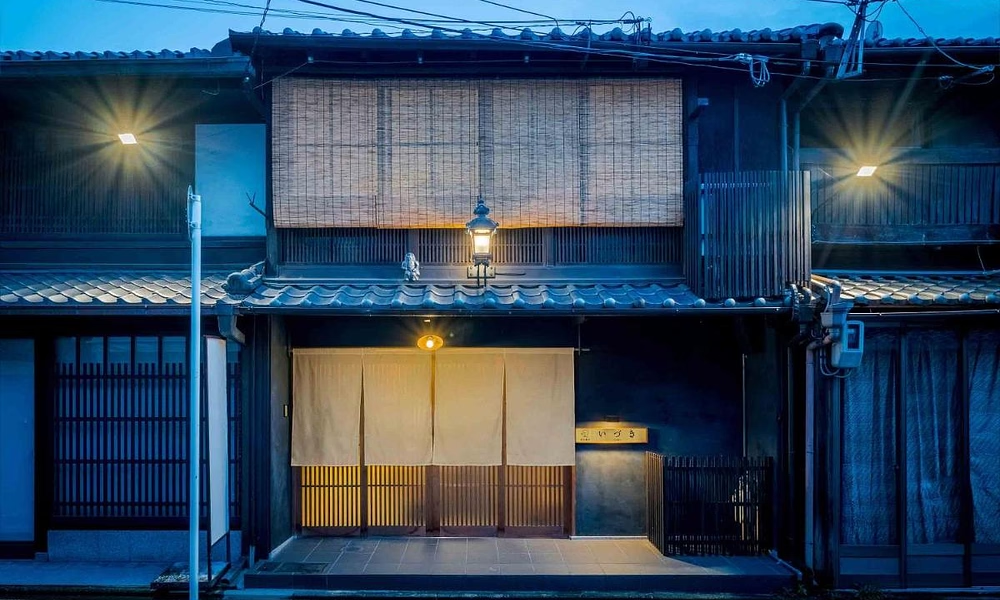
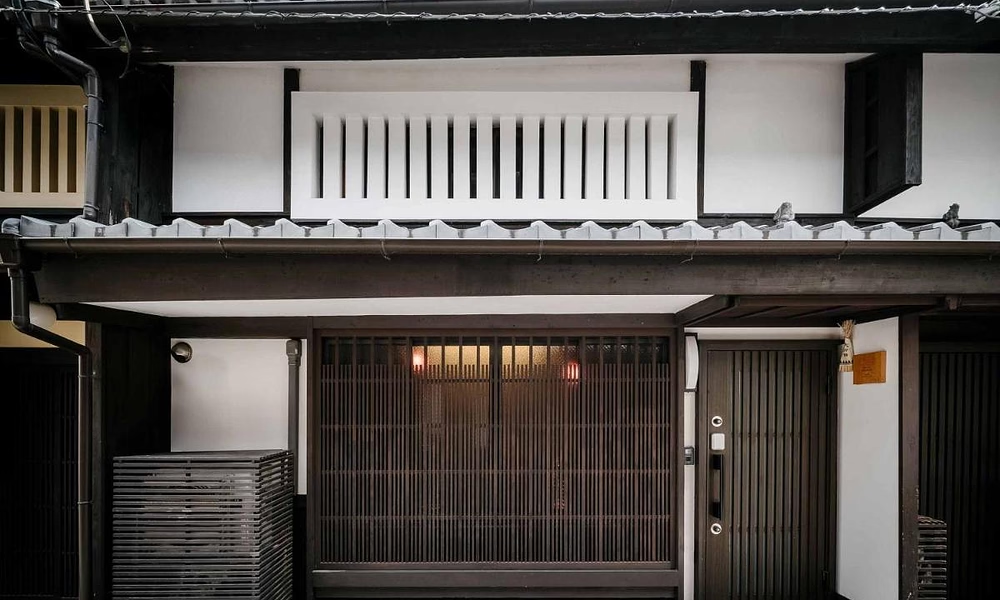
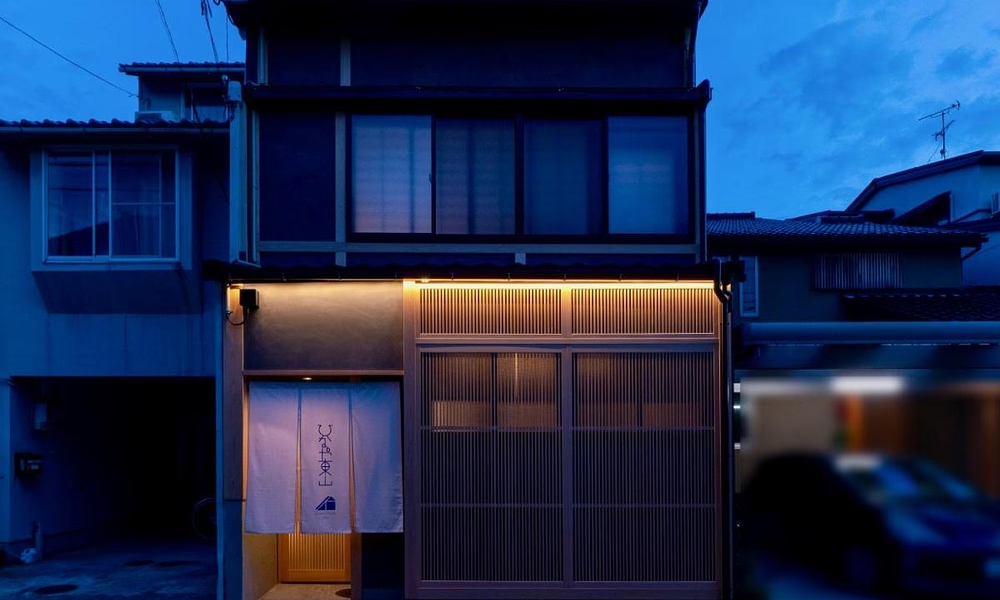
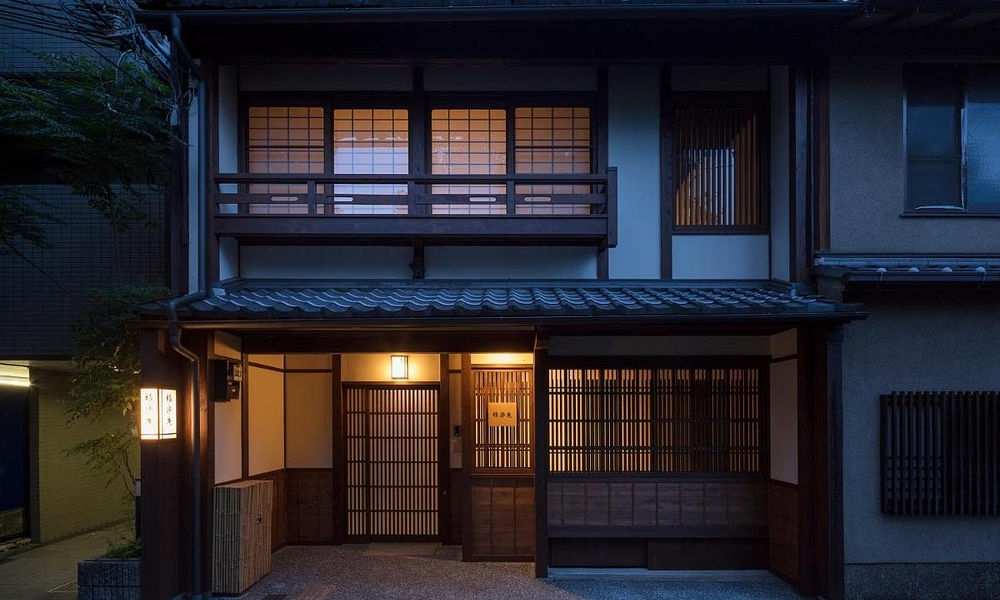
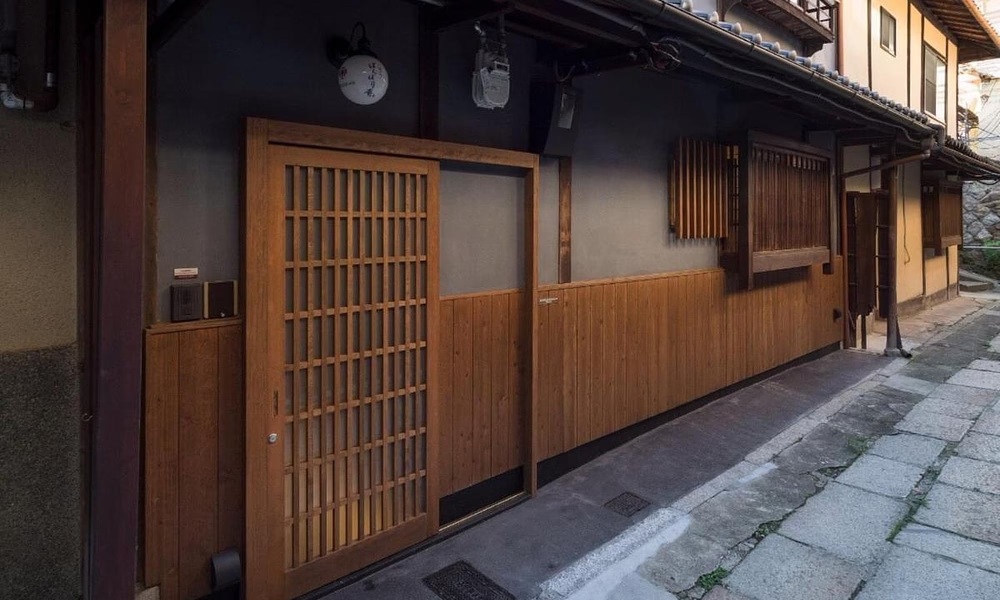
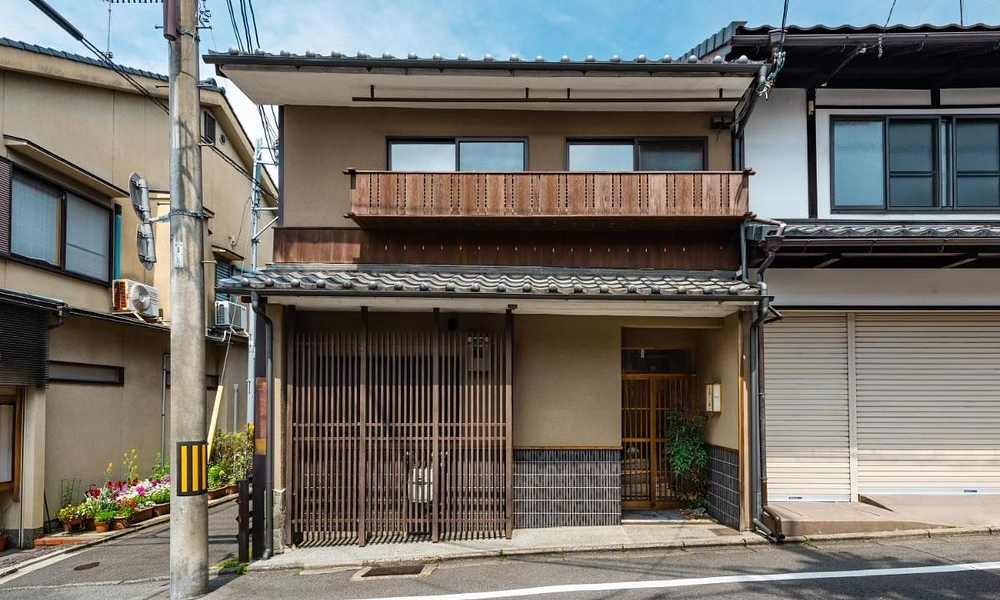
Machiya  Machiya are traditional Japanese townhouses, especially in Kyoto, but also found in Naraijuku, Kanazawa, Takayama, and Kurashiki. Although construction ceased after the 1950 Building Standards Act, many historic machiya remain, offering visitors a glimpse into Japan’s architectural heritage. Check our list of machiyas for a memorable vacation! 
4-Star 9.7
Early Modern & Colonial Expansion Every historic hotel tells a unique tale of its time. From Renaissance’s Gothic cathedrals to Japanese simplicity, each location reflects the culture, way of life, and architectural style of its era. This property belongs to Early Modern & Colonial Expansion. Click to know more about this period.
珠数屋町112, 600-8348 Nishi-kujō-Toriiguchichō, Japan
$335.00 total
Akane an Machiya House
1 km from airport This is a straight-line distance from Kyoto. Actual travel distance may vary.

Akane an Machiya House

Machiya  Machiya are traditional Japanese townhouses, especially in Kyoto, but also found in Naraijuku, Kanazawa, Takayama, and Kurashiki. Although construction ceased after the 1950 Building Standards Act, many historic machiya remain, offering visitors a glimpse into Japan’s architectural heritage. Check our list of machiyas for a memorable vacation! 
4-Star 7.7
Industrial & Imperial Era Every historic hotel tells a unique tale of its time. From Renaissance’s Gothic cathedrals to Japanese simplicity, each location reflects the culture, way of life, and architectural style of its era. This property belongs to Industrial & Imperial Era. Click to know more about this period.
Nakagyo-ku Kaji-cho 172-14, 604-8267 Kyoto, Japan
$235.00 total
Hinaya Higashiyama Machiya House
30 km from airport This is a straight-line distance from Komatsu Airport. Actual travel distance may vary.

Hinaya Higashiyama Machiya House

Machiya  Machiya are traditional Japanese townhouses, especially in Kyoto, but also found in Naraijuku, Kanazawa, Takayama, and Kurashiki. Although construction ceased after the 1950 Building Standards Act, many historic machiya remain, offering visitors a glimpse into Japan’s architectural heritage. Check our list of machiyas for a memorable vacation! 
4-Star 9.0
Industrial & Imperial Era Every historic hotel tells a unique tale of its time. From Renaissance’s Gothic cathedrals to Japanese simplicity, each location reflects the culture, way of life, and architectural style of its era. This property belongs to Industrial & Imperial Era. Click to know more about this period.
Higashiyama 3-31-10, 920-0831 Kanazawa, Japan
$313.00 total
Garaku-an Machiya
2 km from airport This is a straight-line distance from Kyoto. Actual travel distance may vary.

Garaku-an Machiya

Machiya  Machiya are traditional Japanese townhouses, especially in Kyoto, but also found in Naraijuku, Kanazawa, Takayama, and Kurashiki. Although construction ceased after the 1950 Building Standards Act, many historic machiya remain, offering visitors a glimpse into Japan’s architectural heritage. Check our list of machiyas for a memorable vacation! 
4-Star 9.0
Early Modern & Colonial Expansion Every historic hotel tells a unique tale of its time. From Renaissance’s Gothic cathedrals to Japanese simplicity, each location reflects the culture, way of life, and architectural style of its era. This property belongs to Early Modern & Colonial Expansion. Click to know more about this period.
Shimogyo-ku Minamikyogoku-cho 74-1, 600-8117 Kyoto, Japan
$542.00 total
Bonbori-an Machiya House
3 km from airport This is a straight-line distance from Kyoto. Actual travel distance may vary.

Bonbori-an Machiya House

Machiya  Machiya are traditional Japanese townhouses, especially in Kyoto, but also found in Naraijuku, Kanazawa, Takayama, and Kurashiki. Although construction ceased after the 1950 Building Standards Act, many historic machiya remain, offering visitors a glimpse into Japan’s architectural heritage. Check our list of machiyas for a memorable vacation! 
4-Star 9.4
Early Modern & Colonial Expansion Every historic hotel tells a unique tale of its time. From Renaissance’s Gothic cathedrals to Japanese simplicity, each location reflects the culture, way of life, and architectural style of its era. This property belongs to Early Modern & Colonial Expansion. Click to know more about this period.
Higashiyama-ku Yasaka Kamimachi 374-10 , 605-0827 Kyoto, Japan
$371.00 total
Hanagoromo Machiya House
2 km from airport This is a straight-line distance from Kyoto. Actual travel distance may vary.

Hanagoromo Machiya House

Machiya  Machiya are traditional Japanese townhouses, especially in Kyoto, but also found in Naraijuku, Kanazawa, Takayama, and Kurashiki. Although construction ceased after the 1950 Building Standards Act, many historic machiya remain, offering visitors a glimpse into Japan’s architectural heritage. Check our list of machiyas for a memorable vacation! 
4-Star 8.6
Industrial & Imperial Era Every historic hotel tells a unique tale of its time. From Renaissance’s Gothic cathedrals to Japanese simplicity, each location reflects the culture, way of life, and architectural style of its era. This property belongs to Industrial & Imperial Era. Click to know more about this period.
Shimogyo-ku Shimozaimokucho 446, 600-8017 Kyoto, Japan
$242.00 total
Choya Chawanzaka Machiya House
3 km from airport This is a straight-line distance from Kyoto. Actual travel distance may vary.

Choya Chawanzaka Machiya House

Machiya  Machiya are traditional Japanese townhouses, especially in Kyoto, but also found in Naraijuku, Kanazawa, Takayama, and Kurashiki. Although construction ceased after the 1950 Building Standards Act, many historic machiya remain, offering visitors a glimpse into Japan’s architectural heritage. Check our list of machiyas for a memorable vacation! 
4-Star 9.5
Industrial & Imperial Era Every historic hotel tells a unique tale of its time. From Renaissance’s Gothic cathedrals to Japanese simplicity, each location reflects the culture, way of life, and architectural style of its era. This property belongs to Industrial & Imperial Era. Click to know more about this period.
Higashiyama-ku Gojobashihigashi 6-583-51, 605-0846 Kyoto, Japan
$378.00 total
Kohaku-an Machiya House
3 km from airport This is a straight-line distance from Kyoto. Actual travel distance may vary.

Kohaku-an Machiya House

Machiya  Machiya are traditional Japanese townhouses, especially in Kyoto, but also found in Naraijuku, Kanazawa, Takayama, and Kurashiki. Although construction ceased after the 1950 Building Standards Act, many historic machiya remain, offering visitors a glimpse into Japan’s architectural heritage. Check our list of machiyas for a memorable vacation! 
4-Star 9.3
Industrial & Imperial Era Every historic hotel tells a unique tale of its time. From Renaissance’s Gothic cathedrals to Japanese simplicity, each location reflects the culture, way of life, and architectural style of its era. This property belongs to Industrial & Imperial Era. Click to know more about this period.
Higashiyama-ku Sennyuji Suzumegamori-cho 3-8, 605-0975 Kyoto, Japan
$206.00 total
Suigetsu Machiya House
2 km from airport This is a straight-line distance from Kyoto. Actual travel distance may vary.

Suigetsu Machiya House

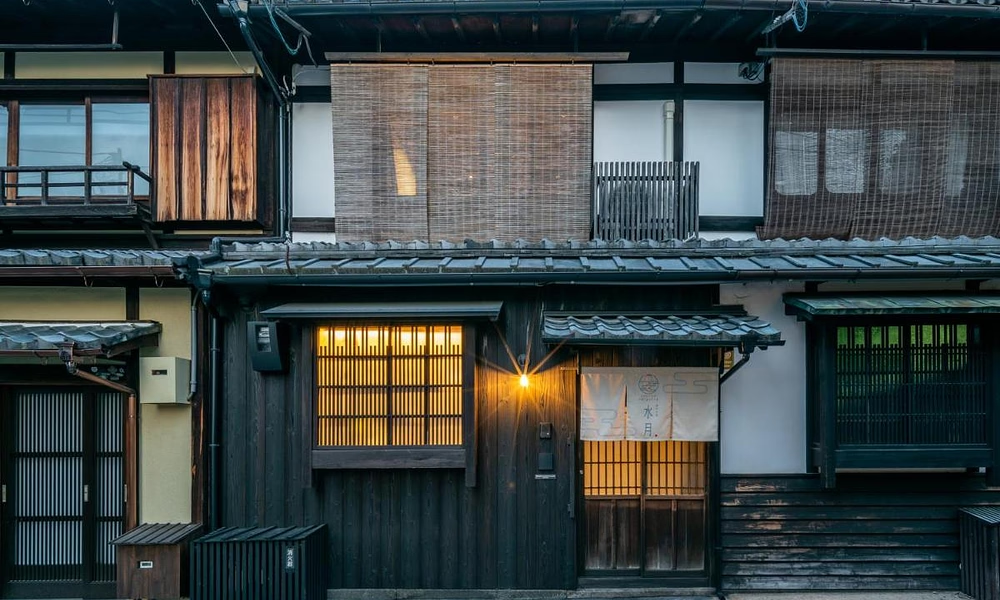
Machiya  Machiya are traditional Japanese townhouses, especially in Kyoto, but also found in Naraijuku, Kanazawa, Takayama, and Kurashiki. Although construction ceased after the 1950 Building Standards Act, many historic machiya remain, offering visitors a glimpse into Japan’s architectural heritage. Check our list of machiyas for a memorable vacation! 
4-Star 8.5
Industrial & Imperial Era Every historic hotel tells a unique tale of its time. From Renaissance’s Gothic cathedrals to Japanese simplicity, each location reflects the culture, way of life, and architectural style of its era. This property belongs to Industrial & Imperial Era. Click to know more about this period.
Higashiyama-ku Kadowakicho 187-5, 605-0843 Kyoto, Japan
$299.00 total
Nadeshiko Shirakawa Machiya
3 km from airport This is a straight-line distance from Kyoto. Actual travel distance may vary.

Nadeshiko Shirakawa Machiya

Machiya  Machiya are traditional Japanese townhouses, especially in Kyoto, but also found in Naraijuku, Kanazawa, Takayama, and Kurashiki. Although construction ceased after the 1950 Building Standards Act, many historic machiya remain, offering visitors a glimpse into Japan’s architectural heritage. Check our list of machiyas for a memorable vacation! 
4-Star 9.0
Industrial & Imperial Era Every historic hotel tells a unique tale of its time. From Renaissance’s Gothic cathedrals to Japanese simplicity, each location reflects the culture, way of life, and architectural style of its era. This property belongs to Industrial & Imperial Era. Click to know more about this period.
Higashiyama-ku Minamikinomoto-cho 539-6, 605-0015 Kyoto, Japan
$214.00 total